
UAV Emergency Recovery Systems: Why They Matter
Definition and Functional Overview
Unmanned Aerial Vehicle (UAV) emergency recovery systems are integrated safety mechanisms designed to stabilize, decelerate, or safely land a UAV in the event of system failure or abnormal flight conditions. These systems are typically activated automatically or manually when critical faults occur, such as power loss, control signal interruption, or structural malfunction.
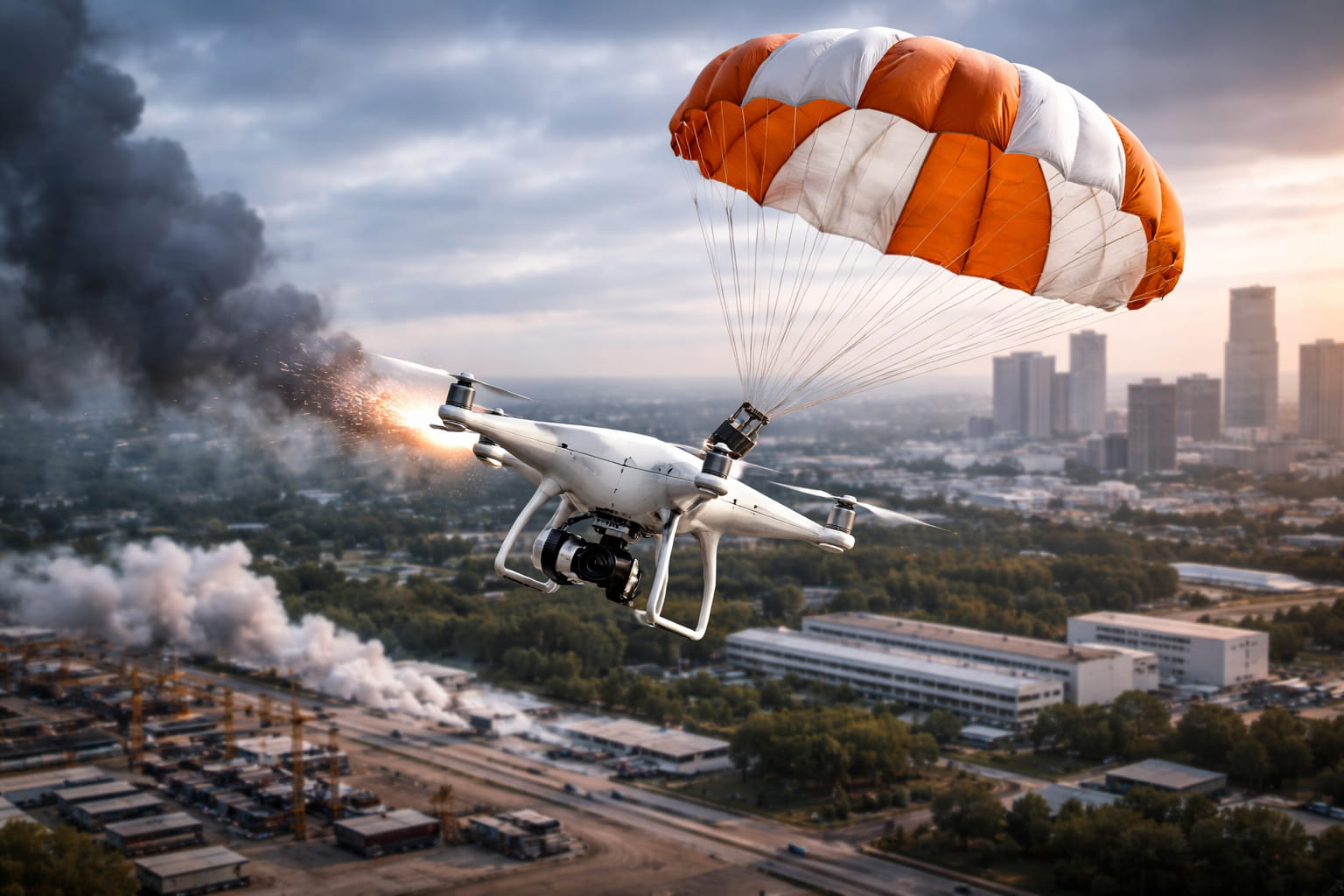
The primary function of an emergency recovery system is to reduce impact energy and prevent uncontrolled descent. In many cases, this involves the deployment of a parachute or controlled descent device that allows the UAV to return to the ground with minimal damage.
As UAV applications expand across industrial inspection, logistics, surveillance, and research operations, the importance of reliable recovery systems has increased significantly. These systems are now considered essential components in risk-sensitive environments where operational safety and asset protection are critical.
Types of UAV Emergency Recovery Systems
UAV recovery systems are not limited to a single design approach. Different technologies are used depending on the size, weight, and operational requirements of the aircraft.
Parachute-Based Recovery Systems
Use aerodynamic drag to slow descent
Can be deployed using spring-loaded, pneumatic, or pyrotechnic mechanisms
Suitable for a wide range of UAV sizes, from small drones to heavy industrial platforms
Ballistic Recovery Systems
Utilize a small propulsion charge to rapidly deploy a parachute
Effective at low altitudes where deployment time is critical
Common in high-risk or high-value UAV operations
Controlled Descent Systems
Use propeller control or autorotation to stabilize descent
Require partial system functionality to remain effective
Typically integrated into advanced flight control systems
Hybrid Systems
Combine multiple recovery methods for redundancy
May include both parachute deployment and controlled landing algorithms
Each system type presents different trade-offs in terms of response time, reliability, and complexity. Selection depends on mission profile and risk tolerance.
Failure Scenarios Requiring Emergency Recovery
Emergency recovery systems are designed to respond to a variety of failure conditions that can occur during UAV operation.
Common Failure Modes
Power system failure: Battery depletion or electrical faults leading to immediate loss of propulsion
Flight control malfunction: Software errors or sensor failures affecting stability
Communication loss: Disruption of command and control links between the UAV and ground station
Structural damage: Mid-air component failure due to stress or collision
Environmental disturbances: Strong winds, turbulence, or unexpected obstacles
In these scenarios, the UAV may lose the ability to maintain controlled flight. Without an emergency recovery system, this can result in uncontrolled descent, posing risks to people, property, and the UAV itself.
Safety and Risk Reduction Benefits
The integration of emergency recovery systems significantly enhances operational safety. These systems serve as a critical safeguard in both routine and high-risk missions.
Key Safety Advantages
Impact energy reduction: Slows descent speed, minimizing damage upon landing
Protection of third parties: Reduces risk to people and infrastructure on the ground
Asset preservation: Increases the likelihood of recovering reusable UAV components
Operational compliance: Supports adherence to aviation safety guidelines and regulatory requirements
In many regulatory environments, the use of recovery systems can facilitate approval for operations over populated areas or sensitive infrastructure. This makes them not only a safety feature but also an enabler of broader operational capabilities.
Technical Design Considerations
Designing an effective UAV emergency recovery system involves multiple engineering factors that influence performance and reliability.
Deployment Mechanism
Rapid activation is essential, especially at low altitudes
Mechanisms may include spring-loaded systems, compressed gas, or ballistic deployment
Canopy Design and Materials
Parachute shape (round, square, cross) affects descent stability
High-strength, lightweight fabrics improve durability and load capacity
System Integration
Must be compatible with UAV structure and weight distribution
Requires reliable triggering logic, often integrated with flight control systems
Redundancy and Reliability
Backup activation methods (manual and automatic) increase system robustness
Fail-safe design principles reduce the risk of non-deployment
Manufacturers with extensive engineering experience, such as Nanjing Hongguang General Aviation Equipment Technology Co., Ltd. (CHUTIST), typically focus on optimizing deployment reliability, material performance, and system integration across different UAV categories.
Application Scenarios Across Industries
UAV emergency recovery systems are widely used across various industries where safety and operational continuity are essential.
Industrial Inspection
Power line and pipeline monitoring
Infrastructure inspection in urban or hazardous environments
Logistics and Delivery
Protection of payload during transport
Risk mitigation in populated delivery zones
Research and Testing
Safe recovery of experimental platforms and data collection systems
Support for flight testing under controlled risk conditions
Emergency Response and Public Safety
Deployment in search and rescue missions
Operation in disaster zones where equipment reliability is critical
Aerospace and Defense Applications
High-value UAV missions requiring strict safety protocols
Operations in restricted or sensitive airspace
These applications highlight the importance of recovery systems as a standard safety component rather than an optional accessory.
Regulatory and Compliance Considerations
As UAV usage increases, regulatory authorities are placing greater emphasis on safety systems, including emergency recovery mechanisms.
Key Regulatory Aspects
Requirement for risk mitigation measures in beyond-visual-line-of-sight (BVLOS) operations
Safety assessments for flights over populated areas
Certification or validation of recovery system performance
Documentation and Testing
Verification of deployment reliability through testing
Maintenance of operational records and inspection logs
Compliance with aviation safety guidelines and standards
Meeting regulatory expectations often requires documented evidence of system performance and reliability. Emergency recovery systems play a central role in demonstrating compliance.
Conclusion
UAV emergency recovery systems are essential components that enhance safety, protect assets, and support regulatory compliance in modern UAV operations. By providing controlled descent in failure scenarios, these systems reduce operational risks and enable safer integration of UAVs into complex environments.
As UAV applications continue to expand across industries, the importance of reliable recovery systems will continue to grow. A well-designed system, supported by rigorous testing and proper integration, contributes significantly to mission success and long-term operational sustainability.


