
UAV Parachute vs Airbag Recovery System
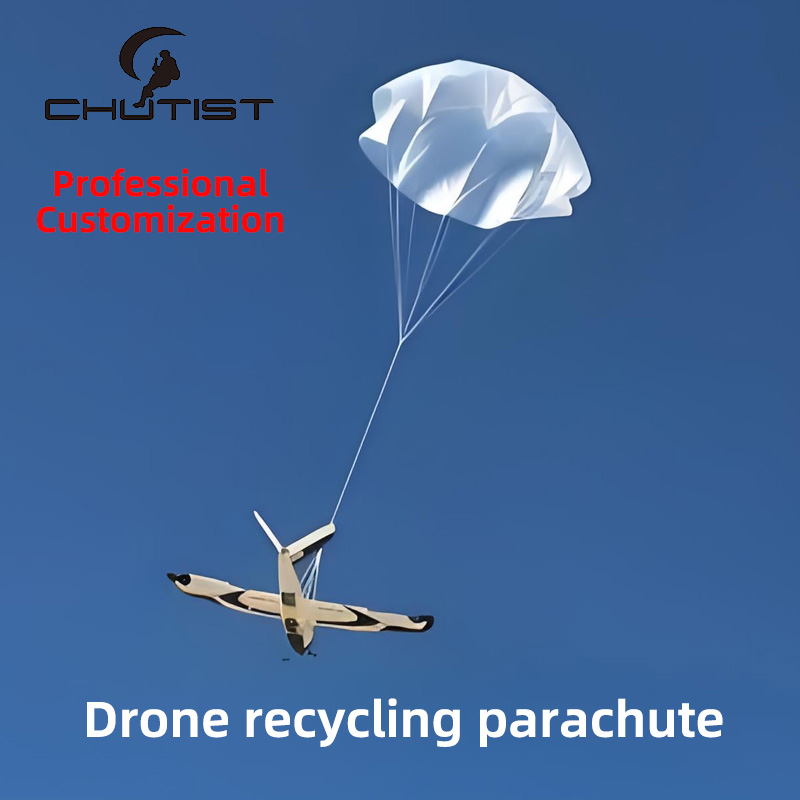
Unmanned aerial vehicles (UAVs) increasingly operate in complex environments where flight failures pose risks to payloads, infrastructure, and personnel. Two widely discussed emergency recovery technologies are parachute systems and airbag recovery systems. Understanding the strengths, limitations, and operational suitability of each is essential for designing safe UAV operations.
This technical guide compares parachute and airbag recovery systems, focusing on deployment mechanics, safety benefits, and integration considerations.
Overview of Emergency Recovery Technologies
Emergency recovery systems for UAVs are designed to reduce uncontrolled descent velocity, stabilize aircraft attitude, and mitigate impact energy. The two primary technologies include:
Parachute Recovery Systems
Deploy a fabric canopy to slow descent aerodynamically.Airbag Recovery Systems
Inflate a cushioning device upon landing to absorb impact energy.
Each system is optimized for specific flight profiles, UAV mass ranges, and operational conditions.
UAV Parachute Recovery System
Operating Principle
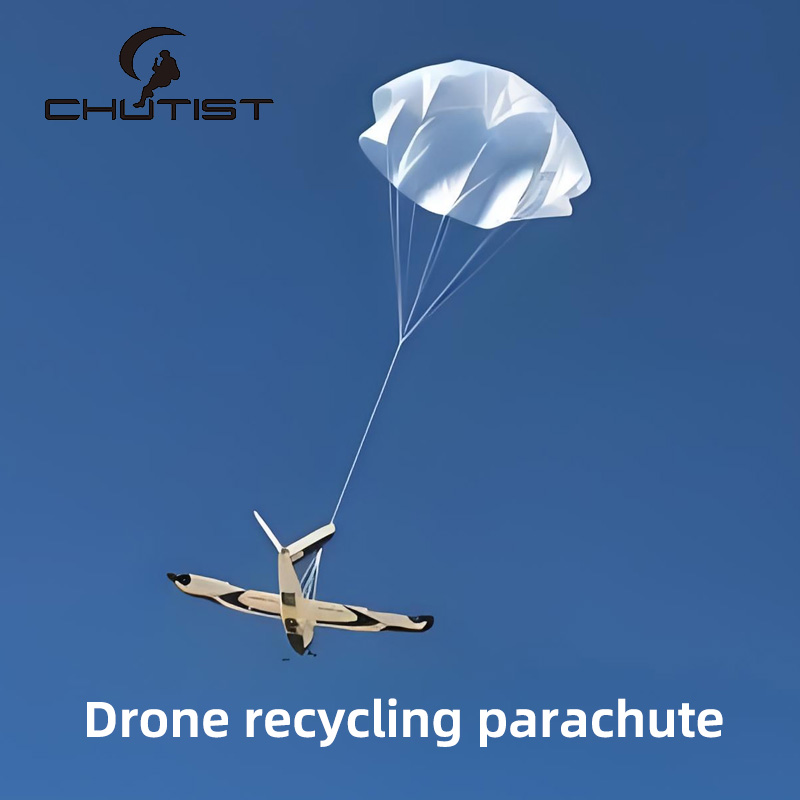
Parachute systems deploy a canopy to generate drag, slowing the UAV’s descent and stabilizing its orientation. Deployment can be triggered by:
Power or propulsion failure
Flight control malfunction
Manual or autonomous emergency commands
Key Advantages
High-Altitude Deployment
Can operate at a wide range of altitudes and speeds.Independent from Propulsion
Functions even during total power loss.Stabilized Descent
Reduces tumbling and unpredictable fall trajectories.Payload Protection
Reduces landing shock, protecting onboard sensors and equipment.
Limitations
Requires sufficient altitude for full inflation
Deployment timing critical to avoid canopy damage
May increase UAV mass slightly due to canopy and container
UAV Airbag Recovery System
Operating Principle
Airbag recovery systems deploy a rapidly inflating cushion to absorb impact energy upon landing. The system is triggered when sensors detect an imminent ground impact.
Key Advantages
Low-Altitude Operation
Can provide protection even when parachute deployment is not possible.Compact Size
Generally smaller and lighter than parachute containers.Immediate Impact Absorption
Reduces forces on UAV structure and payload at the point of contact.
Limitations
Limited horizontal stabilization
Requires precise detection of altitude or impact timing
Less effective for high-speed or high-altitude emergencies
Deployment failure can occur if sensors misread terrain or speed
Comparative Analysis
| Feature | Parachute Recovery System | Airbag Recovery System |
|---|---|---|
| Deployment Altitude | Medium to High | Low |
| Speed Tolerance | Moderate to High | Low to Moderate |
| Payload Mass Capacity | Medium to Heavy | Low to Medium |
| Descent Stabilization | High | Low |
| Independent Operation | Yes | Partially (sensor-dependent) |
| Impact Energy Reduction | Moderate | High (at point of contact) |
| Complexity | Medium | Low |
| Reusability | High | Limited (may require repacking/replacement) |
Operational Suitability
Parachute Systems Are Ideal For:
Fixed-wing long-endurance UAVs
Heavy payload missions
BVLOS operations
High-altitude environments
Airbag Systems Are Ideal For:
Low-altitude multirotor UAVs
Lightweight inspection or survey drones
Short-range urban operations
Situations requiring immediate impact absorption
Integration Considerations
When integrating either system:
Verify structural mounting points for load distribution
Avoid interference with propulsion, sensors, or payloads
Test deployment under real-world operational conditions
Ensure independent trigger logic for redundancy
Some platforms benefit from hybrid systems, using a parachute for high-altitude descent and airbags for final ground cushioning.
Safety and Reliability
The safety improvement of both systems depends on:
Correct load rating for UAV mass
Verified deployment timing and speed range
Robust integration with UAV structure
Repeated testing under operational conditions
Manufacturers with experience in aviation-grade UAV recovery systems, such as Nanjing Hongguang General Aviation Equipment Technology Co., Ltd., provide validated solutions across multiple UAV categories, ensuring predictable behavior in real emergency scenarios.
Parachute and airbag recovery systems both enhance UAV operational safety, but they differ significantly in design and performance characteristics:
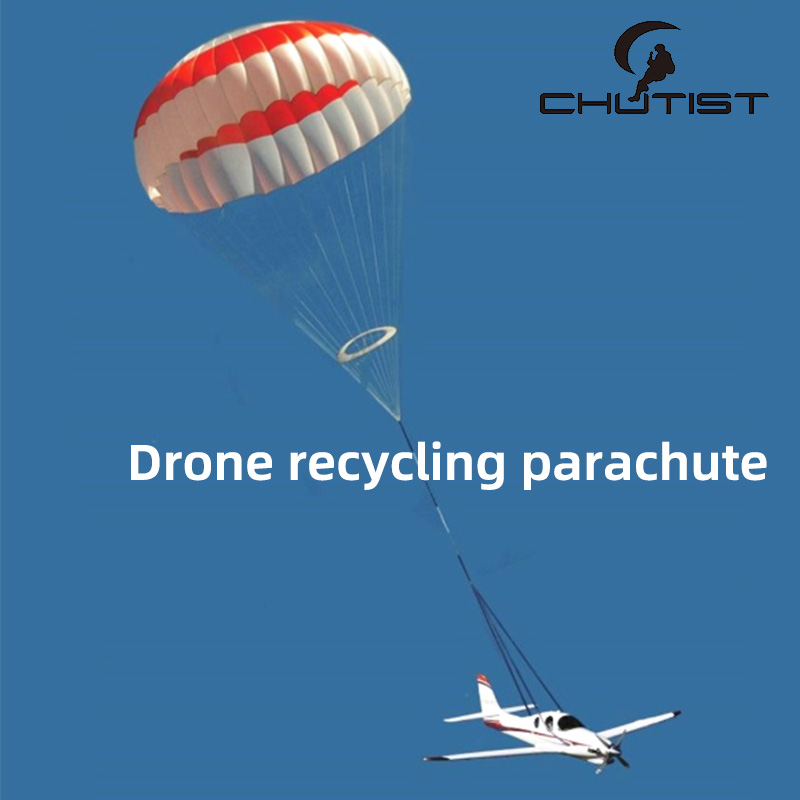
Parachutes: Best for high-altitude, long-duration, or heavy payload UAVs; provide stabilized descent and independent operation.
Airbags: Best for low-altitude, lightweight, or immediate-impact scenarios; provide cushioning but limited stabilization.
Selecting the appropriate system depends on UAV type, mission profile, operational environment, and acceptable risk levels. For some advanced UAVs, a combined parachute-airbag solution provides optimal protection across multiple failure scenarios.


