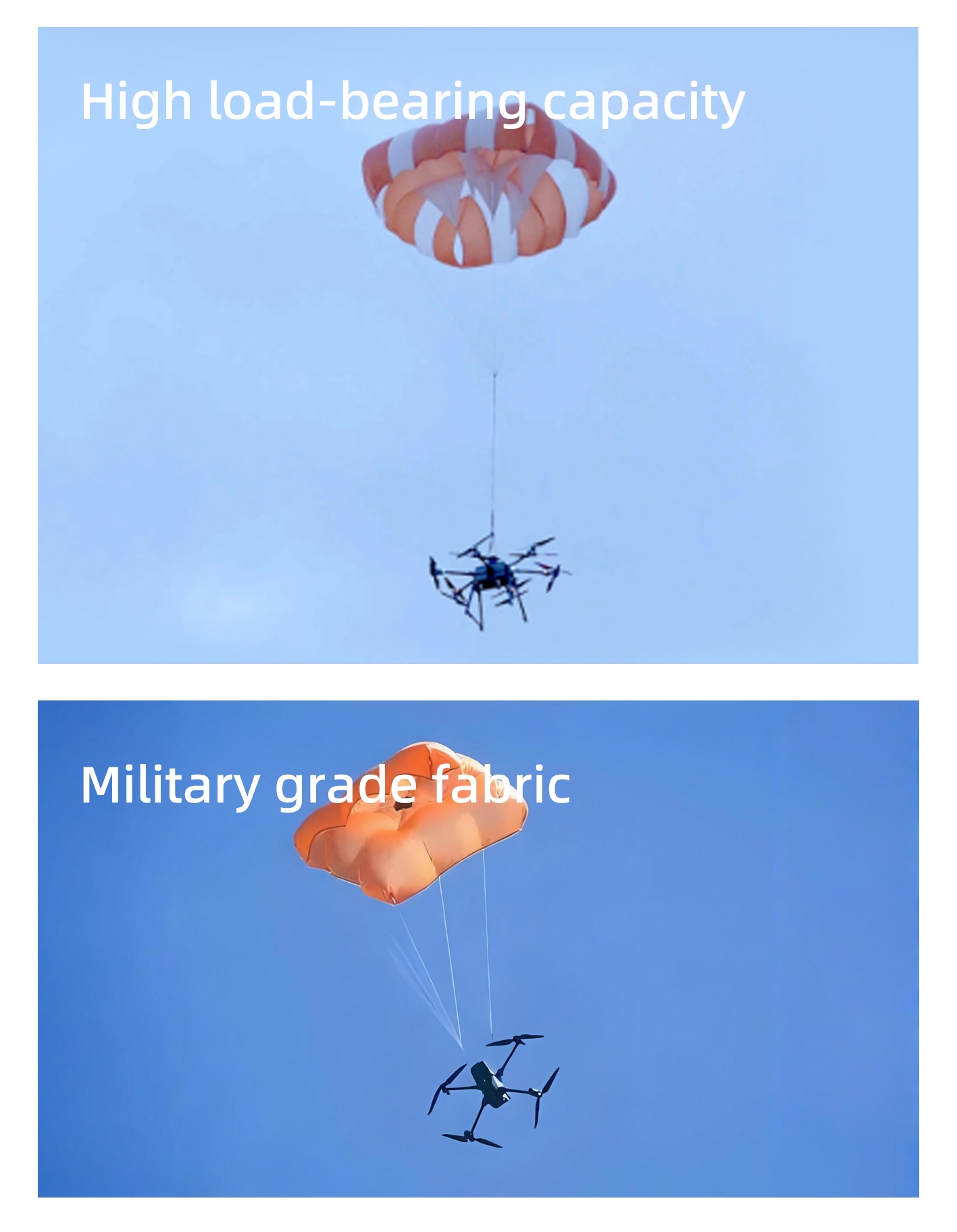
Designing a UAV parachute system requires precise weight calculations to ensure safe and controlled recovery. An incorrectly sized parachute can lead to excessive descent speed, unstable landings, or canopy failure, especially for UAVs carrying heavy or sensitive payloads.
This guide provides a technical overview of how to calculate the appropriate parachute system weight for UAVs, including key factors, formulas, and practical considerations.
Step 1: Determine Total UAV Weight
The total UAV weight is the starting point for parachute sizing. Include:
Drone airframe: Structural components and motors
Payload: Cameras, sensors, cargo, or tools
Battery or fuel: Fully charged operational weight
Accessories: Additional equipment such as antennas or sensors
Formula:
Wtotal=Wdrone+Wpayload+Wbattery+WaccessoriesSafety margin: Add 10–20% to account for dynamic loads during parachute deployment.
Wdesign=Wtotal×1.2This ensures the parachute can handle unexpected forces without failure.
Step 2: Choose Desired Descent Rate
Descent rate (Vd) affects impact forces on the UAV and payload. Recommended ranges:
Small UAVs (<5 kg): 2–4 m/s
Medium UAVs (5–20 kg): 1.5–3 m/s
Heavy UAVs (>20 kg): 1–2 m/s
Considerations:
Step 3: Calculate Required Parachute Surface Area
The parachute canopy area determines drag and descent speed. For a round parachute, the approximate formula is:
A=Cd⋅ρ⋅Vd22WdesignWhere:
A = canopy area (m²)
Wdesign = total UAV weight with safety margin (N)
Cd = drag coefficient (typically 0.75–0.9 for round canopies)
ρ = air density (~1.225 kg/m³ at sea level)
Vd = desired descent rate (m/s)
Key points:
Larger A reduces descent rate.
Higher Wdesign requires proportionally larger canopies.
For cruciform or ram-air canopies, the effective drag coefficient differs and must be adjusted.
Step 4: Determine Suspension Line Strength
Suspension lines carry the full load of the UAV during deployment.
Fline=nlinesWdesignWhere nlines = number of suspension lines.
Fline,max=Fline×FoS
Step 5: Account for Deployment Shock
Dynamic forces during parachute deployment can exceed static weight by 2–3×.
Use reefing or staged deployment to reduce opening shock for heavy UAVs.
Adjust line strength and canopy size accordingly.
Verify that UAV attachment points can handle peak forces.
Step 6: Include Material Weight
The parachute system itself adds weight to the UAV:
Canopy fabric: Nylon or polyester, depending on environmental requirements
Suspension lines and hardware: Carabiners, connectors, or release mechanisms
Deployment devices: Pilot chute, spring ejection, or gas-assisted systems
Design tip: Ensure total system weight does not compromise UAV flight performance.
Step 7: Test and Validate
Perform drop tests at the calculated total weight to verify:
Adjust canopy size, line length, or deployment method as necessary.
Repeated-use systems should undergo cycle testing to ensure durability over multiple missions.
Manufacturer Considerations
Working with experienced manufacturers ensures accurate weight calculations and system reliability:
Nanjing Hongguang General Aviation Equipment Technology Co., Ltd. has extensive expertise in UAV recovery systems.
Offers technical guidance on canopy sizing, material selection, and deployment dynamics.
Provides tested solutions for both light and heavy industrial UAVs, ensuring predictable descent and payload protection.
Summary: UAV Parachute Weight Calculation Steps
Determine total UAV weight including payload, battery, and accessories
Apply safety margin (10–20%) to account for dynamic loads
Select desired descent rate based on UAV type and payload sensitivity
Calculate canopy surface area using drag and weight formulas
Determine suspension line strength with factor of safety
Account for deployment shock and dynamic forces
Include parachute system weight in total UAV load
Test and validate through drop tests and repeated-use trials
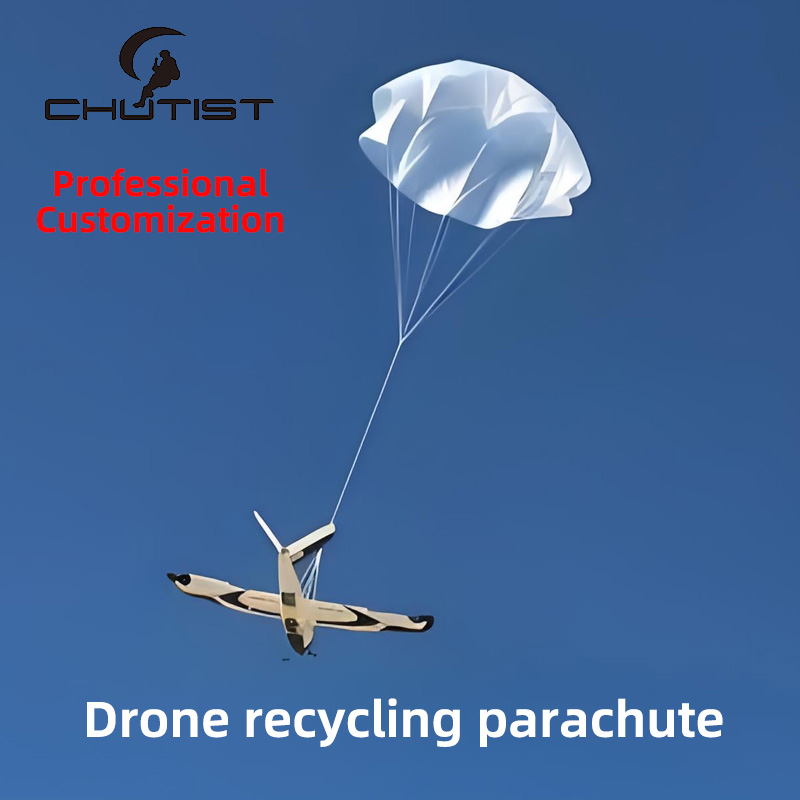
Accurate weight calculation is the foundation of a safe and effective UAV parachute system. By carefully considering UAV weight, descent rate, canopy area, line strength, and deployment dynamics, operators can design a recovery solution that protects equipment and ensures operational safety. Experienced manufacturers like Nanjing Hongguang General Aviation Equipment Technology Co., Ltd. provide guidance, tested systems, and compliance with international standards, delivering reliable parachute solutions for industrial, commercial, and heavy UAV applications.


