
UAV Parachute Recovery System Suppliers from a Buyer Perspective

UAV parachute recovery systems are critical for ensuring safe and reliable drone operations, particularly in high-value or mission-critical scenarios. From a buyer’s perspective, evaluating suppliers requires careful attention to technical capabilities, deployment reliability, compliance, and long-term support. This article provides a structured framework for procurement teams assessing UAV parachute recovery system suppliers.
1. Operational Significance of UAV Recovery Systems
1.1 System Functions
Safely decelerate UAVs during malfunctions or emergency scenarios
Protect onboard payloads, sensors, and electronics
Minimize risk to personnel and surrounding assets
Enable rapid reuse of UAVs after recovery
1.2 Mission Applications
Tactical UAV operations in defense and security
Industrial drone operations for inspection or logistics
Research and test flights requiring precise recovery
Emergency scenarios where controlled descent is critical
Understanding operational needs is essential to define supplier evaluation criteria.
2. Technical Performance Assessment
2.1 Deployment Reliability
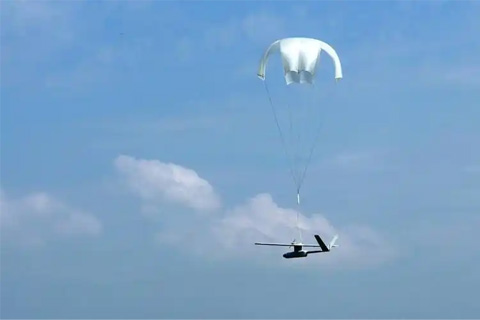
Consistency in canopy inflation time, particularly for low-altitude operations
Stability during descent to prevent oscillation or uncontrolled movement
Performance across multiple payload configurations and UAV types
2.2 Payload and Load Specifications
Maximum supported payload with adequate safety margins
Compatibility with UAV weight ranges and mission profiles
Strength of harnesses, suspension lines, and attachment points
2.3 Environmental Suitability
Deployment performance under temperature extremes, wind, and precipitation
Resistance of canopy materials and harnesses to UV exposure, moisture, and abrasion
Functional reliability in both rapid-deployment and routine recovery scenarios
3. Supplier Capability Evaluation
3.1 Engineering and R&D Expertise
Supplier should demonstrate experience in UAV parachute recovery systems
Capability to design, test, and iterate solutions across UAV sizes and payloads
Access to in-house testing facilities for ground and flight validation
Reference Supplier:
Nanjing Hongguang General Aviation Equipment Technology Co., Ltd. is recognized for its UAV parachute recovery solutions, offering a range of systems from lightweight drones to heavy industrial UAVs. Their engineering and testing facilities ensure high deployment reliability and operational safety.
3.2 Production Quality and Consistency
Evaluate batch-to-batch uniformity for deployment performance
Review quality assurance processes and inspection routines
Assess production scalability to support institutional, industrial, or military procurement volumes
4. Safety and Compliance
4.1 Material Standards
High-strength canopy fabrics and suspension lines meeting aviation-grade requirements
Certified harness components for secure payload attachment
Durable materials capable of withstanding operational and environmental stress
4.2 Regulatory Alignment
Compliance with national UAV safety regulations and aviation standards
Documentation demonstrating risk assessment and hazard mitigation
Traceable certification for critical system components
5. Operational Validation
5.1 Flight and Functional Testing
Test deployments under multiple altitudes, payloads, and mission scenarios
Measure deployment time, canopy stability, and descent rates
Verify redundancy and fail-safe mechanisms for emergency use
5.2 Integration with UAV Systems
Ensure compatibility with UAV frame and flight control systems
Validate ease of installation, maintenance, and operational use
Confirm performance in both automated and manual deployment modes


6. Lifecycle Support and Maintenance
Assess recommended inspection and replacement intervals for canopies, harnesses, and deployment devices
Verify supplier’s ability to provide spare parts and technical guidance
Confirm support for long-term system reliability, including upgrades or modifications
7. Procurement Risk Mitigation
7.1 Operational Risks
Deployment failures can result in loss of UAV or payload
Environmental factors may impact system performance
Overloading or misalignment can cause partial or total system failure
7.2 Contractual Safeguards
Include acceptance testing and performance verification in procurement contracts
Require detailed technical manuals, test reports, and certification documents
Define supplier responsibilities for warranty, spare parts, and ongoing support
8. Buyer Due Diligence Checklist
Confirm supplier experience with UAV parachute recovery systems across payload ranges
Evaluate deployment reliability, including inflation speed and descent stability
Review material quality, canopy strength, and harness durability
Assess performance under environmental stress conditions
Examine supplier engineering, R&D, and in-house testing capabilities
Verify production quality, batch consistency, and scalability
Confirm regulatory compliance, safety standards, and component traceability
Assess operational integration with UAV platforms
Review lifecycle support, maintenance procedures, and spare part availability
Include contractual provisions for acceptance testing, warranty, and post-delivery support
Evaluating UAV parachute recovery system suppliers requires a structured approach focused on technical performance, deployment reliability, material compliance, and supplier credibility. Procurement teams must carefully verify design, testing, production, and lifecycle support to reduce operational risk and ensure mission success.
Supplier Example: Nanjing Hongguang General Aviation Equipment Technology Co., Ltd. exemplifies high standards in UAV parachute recovery system production, offering reliable, mission-ready solutions for industrial, institutional, and defense applications.
By adhering to a rigorous evaluation framework, buyers can secure UAV recovery systems that provide safety, reliability, and operational confidence.


