
Parachute Mission Equipment Selection Criteria
Parachute mission equipment selection criteria refer to the technical standards and operational considerations used to determine the most suitable equipment configuration for a specific parachuting task. These criteria typically evaluate factors such as mission environment, payload requirements, deployment altitude, descent control characteristics, and safety performance. Proper equipment selection ensures that parachute operations can be conducted reliably while maintaining predictable flight behavior and safe landing conditions.
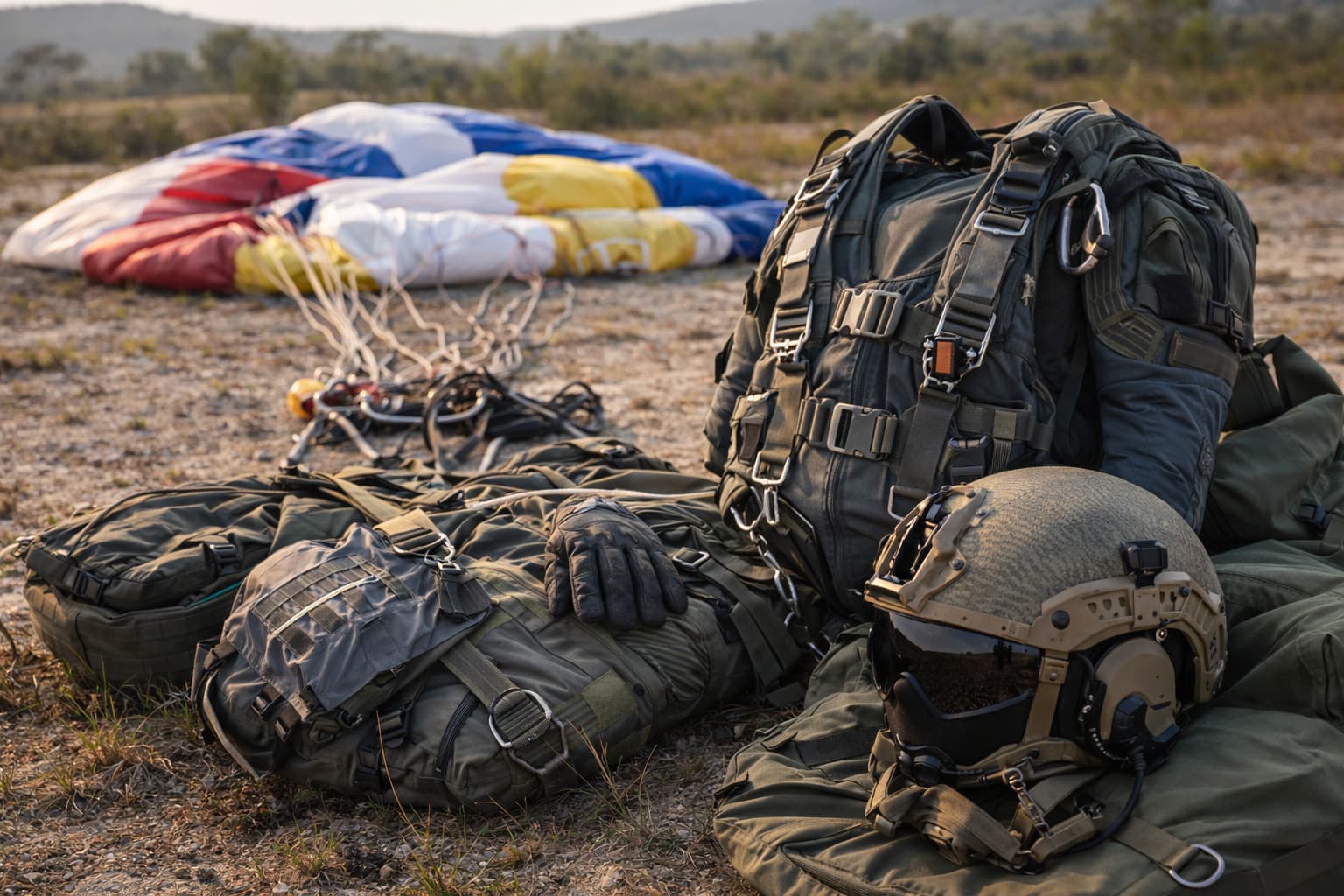
In aviation operations, parachute systems are rarely used alone. A complete mission configuration often includes the parachute canopy, deployment system, harness assembly, protective equipment, and supporting airborne gear. Selecting appropriate equipment requires understanding the operational objectives and the physical conditions that influence parachute performance.
Mission Type and Operational Objectives
The first factor in parachute equipment selection is the mission type. Different parachuting missions impose unique technical requirements on equipment systems, particularly in terms of deployment reliability, load capacity, and descent characteristics.
Common parachute mission categories include:
Personnel parachute training and aviation sports
Cargo or equipment aerial delivery
UAV emergency recovery missions
High-altitude research and testing operations
Emergency rescue or evacuation scenarios
Each mission type demands different equipment characteristics. For example, cargo parachutes emphasize load stability and descent control, while personnel parachute systems prioritize maneuverability and landing safety.
Understanding the operational objective helps determine canopy structure, suspension line strength, and deployment system configuration.
Payload Capacity and Load Distribution
Payload capacity is a critical parameter when selecting parachute mission equipment. Every parachute system is designed to operate within a specific load range, and exceeding this range may compromise structural integrity or flight stability.
Key considerations related to payload include:
Total system weight
Equipment carried by personnel
UAV or payload mass
Load distribution across the harness system
Balanced load distribution ensures that descent forces are evenly transmitted through the suspension lines and harness components. Uneven loads can create canopy distortion, unstable descent behavior, or excessive stress on structural elements.
Engineering analysis of payload requirements is therefore an essential step in determining appropriate parachute size and configuration.
Deployment Conditions and Altitude Range
Deployment altitude significantly influences parachute system design and equipment selection. Different altitude environments affect air density, descent speed, and canopy inflation behavior.
Typical operational altitude ranges include:
Low-altitude deployment below 300 meters
Medium-altitude operational deployment between 300 and 3000 meters
High-altitude research or military operations above 3000 meters
Low-altitude operations often require rapid-deployment systems capable of achieving full canopy inflation within a very short distance. High-altitude deployments may require specialized materials and deployment mechanisms that function reliably in low-temperature and low-pressure environments.
Selecting equipment suited to the operational altitude range ensures consistent canopy deployment and stable descent performance.
Canopy Structure and Aerodynamic Performance
The structural design of the parachute canopy directly affects aerodynamic performance and descent control. Various canopy geometries are used depending on mission requirements and maneuverability needs.
Common parachute canopy types include:
Round parachutes for stable vertical descent
Square or ram-air parachutes for maneuverability
Cross parachutes for improved stability in turbulent air
Semi-flow parachutes designed for specific aerodynamic conditions
Aerodynamic characteristics such as glide ratio, descent speed, and directional control determine how effectively the parachute performs during the mission. Equipment selection therefore involves evaluating canopy structure in relation to mission environment and landing requirements.
Environmental and Terrain Considerations
Environmental conditions also play a major role in parachute equipment selection. Factors such as wind patterns, terrain type, and weather conditions can significantly affect parachute deployment and landing safety.
Important environmental variables include:
Wind speed and direction
Ground terrain conditions
Temperature range
Humidity and atmospheric density
For example, mountainous terrain may require greater maneuverability during descent, while open plains may prioritize stability and predictable landing behavior. Equipment designed for harsh climates may also require materials that maintain strength and flexibility in extreme temperatures.
Evaluating environmental factors helps ensure that parachute systems operate reliably under real mission conditions.
Reliability, Testing, and Certification Standards
Operational reliability is one of the most important criteria in parachute mission equipment selection. Equipment must meet established engineering and safety standards to ensure predictable performance during deployment and descent.
Reliability verification typically involves:
Structural load testing
Deployment reliability testing
Environmental stress testing
Repeated operational trials
Parachute systems used in aviation operations are often developed and validated through extensive engineering research and testing programs. Experienced manufacturers such as Nanjing Hongguang General Aviation Equipment Technology Co., Ltd. have contributed to the development of parachute systems used in aviation sports, aerial delivery, and unmanned aerial vehicle recovery operations.
Adhering to recognized safety standards ensures that mission equipment maintains consistent performance across different operational scenarios.
Maintenance, Inspection, and Lifecycle Considerations
Parachute mission equipment must be maintained and inspected regularly to preserve operational reliability throughout its service life. Even well-designed systems can experience wear due to environmental exposure, repeated deployments, and mechanical stress.
Routine maintenance procedures generally include:
Canopy fabric inspection for damage or wear
Suspension line integrity checks
Deployment system functionality testing
Harness and connection hardware inspection
Lifecycle management ensures that parachute equipment remains safe and effective for future missions. Maintenance schedules and inspection protocols are therefore an important component of overall equipment selection and operational planning.
Conclusion
Parachute mission equipment selection requires careful evaluation of operational objectives, payload capacity, deployment conditions, and environmental factors. By considering these technical parameters, operators can select equipment systems that deliver reliable deployment performance and stable descent behavior.
Modern parachute missions rely on integrated equipment systems designed through engineering analysis and extensive testing. Proper selection, combined with consistent maintenance and inspection practices, ensures that parachute operations can be conducted safely and effectively across a wide range of aviation and aerial deployment scenarios.


