
Parachute Material Nylon vs Polyester Explained
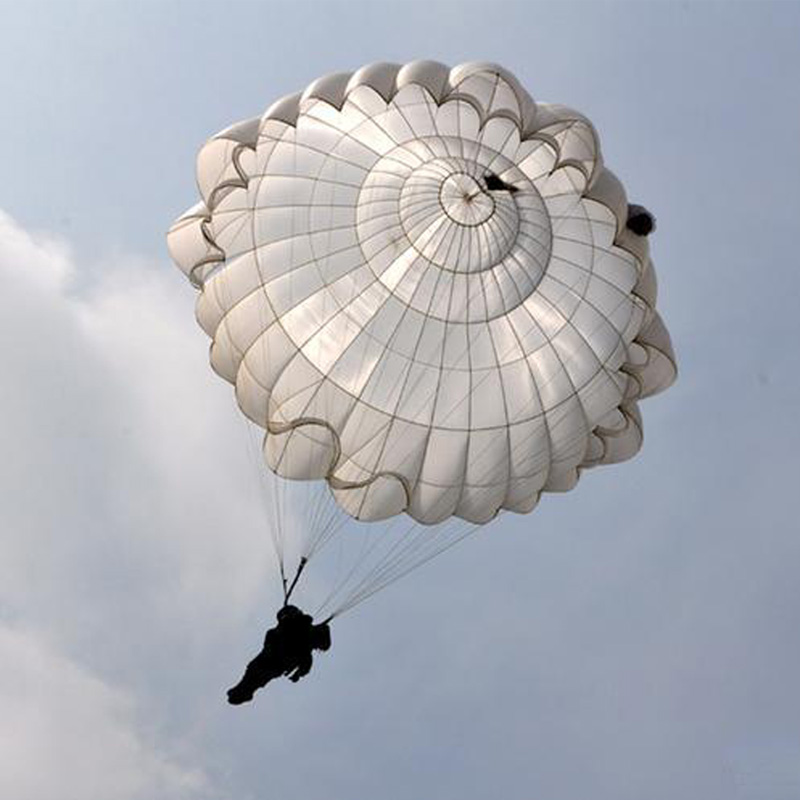
Material selection is one of the most important factors in parachute design, as it directly affects strength, durability, performance, and long-term reliability. Among modern parachute fabrics, nylon and polyester are the two most widely used materials. Each offers distinct mechanical properties, environmental resistance, and operational considerations, making them suitable for different types of parachutes and deployment scenarios.
This article provides a technical comparison of nylon vs polyester parachute materials, explaining their characteristics, performance differences, and practical implications for aviation, sports, training, and UAV recovery systems.
Overview of Parachute Material Requirements
Parachute fabrics must meet several key performance requirements:
High tensile strength to resist opening shock and sustained loads
Good tear and puncture resistance to avoid catastrophic canopy failure
Predictable stretch and elasticity to control deployment dynamics
Resistance to environmental factors such as UV, moisture, and temperature
Lightweight properties to minimize overall system weight
Both nylon and polyester meet these requirements but excel in different areas.
Nylon Parachute Fabric
Material Characteristics
Nylon (polyamide) has been the traditional choice for parachutes since the mid-20th century. Its key characteristics include:
High tensile strength-to-weight ratio
Moderate elasticity (typically 20–30% elongation at break)
Smooth surface that reduces air drag during deployment
Lightweight and flexible for compact packing
Nylon’s elasticity can help absorb opening shock, reducing peak loads on lines and attachment points.
Advantages of Nylon
Elasticity and Shock Absorption
The inherent stretch in nylon distributes opening forces more evenly across the canopy and lines, reducing the likelihood of tearing or line failure during dynamic deployment.Lightweight and Packable
Nylon fabrics can be tightly folded, making them ideal for repeated-use parachutes and sports parachutes where packing volume matters.Abrasion Resistance
Smooth nylon surfaces resist chafing during repeated packing cycles, extending service life.
Limitations of Nylon
Moisture Absorption: Nylon can absorb water, increasing weight and potentially reducing performance in wet conditions.
UV Degradation: Prolonged sunlight exposure can weaken fibers over time, requiring careful storage or UV-resistant coatings.
Thermal Sensitivity: Nylon softens at relatively low temperatures (~215°C melting point), limiting high-temperature applications.
Polyester Parachute Fabric
Material Characteristics
Polyester (PET) has gained popularity in parachute and aerospace applications for its dimensional stability and environmental resistance.
Key characteristics include:
Low stretch (typically 3–5% elongation at break)
High tensile strength, comparable to nylon
Excellent UV and moisture resistance
Minimal shrinkage under heat or load
Polyester’s low elasticity ensures that canopy shape and performance are highly consistent over repeated deployments.
Advantages of Polyester
Dimensional Stability
Polyester maintains its shape under sustained loads, minimizing canopy deformation and improving descent predictability.Environmental Resistance
Resistant to UV, moisture, and chemical exposure, polyester is ideal for long-term outdoor use and harsh environmental conditions.Thermal Tolerance
Higher melting temperature (~250°C) allows polyester to tolerate higher ambient and frictional temperatures without structural compromise.Lower Creep
Polyester exhibits minimal permanent elongation under repeated loads, maintaining canopy integrity over time.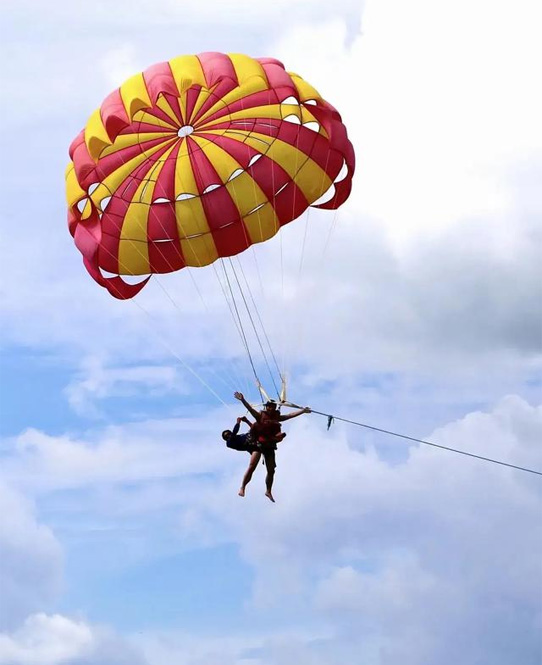
Limitations of Polyester
Reduced Elasticity: Lower stretch can lead to higher peak opening loads, requiring careful design of reefing or staging mechanisms to avoid shock-induced failures.
Heavier Feel: Slightly higher density may impact packing efficiency for certain small or sports parachutes.
Handling Sensitivity: Stiffer fabric can be less forgiving during manual packing and deployment, particularly in student training environments.
Practical Comparison: Nylon vs Polyester
| Feature | Nylon | Polyester |
|---|---|---|
| Elasticity | Moderate (20–30%) | Low (3–5%) |
| Opening Shock Absorption | High | Moderate |
| UV Resistance | Moderate | High |
| Moisture Resistance | Moderate | High |
| Weight & Packability | Excellent | Good |
| Dimensional Stability | Moderate | High |
| Fatigue / Creep Resistance | Moderate | Excellent |
| Typical Use | Training parachutes, sports parachutes, UAV recovery | Long-term outdoor parachutes, high-cycle, heavy payload, specialized aviation |
Selection Criteria Based on Application
Training Parachutes
Frequent use and forgiving behavior favor nylon for its elasticity and shock absorption.
Easier folding and packing make nylon suitable for student operations.
Sports Parachutes
Moderate nylon is often used for repeatable performance and comfort, while advanced ram-air sports canopies may incorporate polyester blends for high-speed, precision landings.
UAV Recovery Systems
Polyester is preferred for durability, dimensional stability, and environmental resistance.
Systems deployed repeatedly in outdoor environments benefit from low creep and minimal UV degradation.
High-Altitude or Specialized Missions
Polyester can handle higher loads, thermal variations, and long-term exposure, making it ideal for heavy payload recovery or specialized aviation operations.
Material Integration in Modern Parachute Systems
Many modern parachutes use nylon-polyester hybrid fabrics or coatings to combine the elasticity and packability of nylon with the environmental resistance and stability of polyester. Strategic material selection often depends on:
Deployment dynamics
Payload weight and type
Repeated use cycles
Environmental exposure
Designers also consider suspension line materials, stitching techniques, and reinforcement fabrics to complement the chosen canopy material.
Maintenance and Lifecycle Considerations
Nylon parachutes require careful drying, UV protection, and monitoring for moisture-induced degradation.
Polyester parachutes demand less environmental protection but may transmit higher opening shock to hardware, requiring routine inspection of lines and attachment points.
Both materials benefit from documented packing, inspection, and lifecycle tracking to ensure safe repeated use.
Role of Manufacturer Expertise
Choosing between nylon and polyester for a specific parachute application requires detailed knowledge of dynamic loads, environmental conditions, and operational expectations. Experienced manufacturers integrate decades of field and test data to optimize material selection.
For example, Nanjing Hongguang General Aviation Equipment Technology Co., Ltd. applies material expertise across aviation sports, UAV recovery, and specialized parachute systems, ensuring that each system meets both performance and durability requirements based on expected deployment cycles and environmental exposure.
Nylon and polyester each have unique advantages for parachute systems:
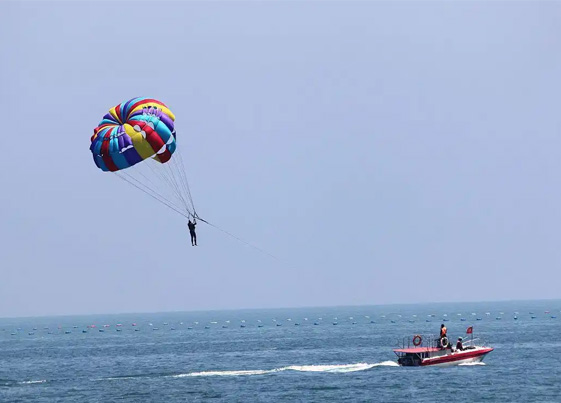
Nylon: Elastic, lightweight, forgiving—ideal for training, sports, and repeated-use parachutes where opening shock absorption and packing flexibility matter.
Polyester: Dimensionally stable, UV- and moisture-resistant—suitable for high-cycle applications, UAV recovery, heavy payloads, and outdoor long-term deployments.
The optimal choice depends on deployment environment, user skill, load requirements, and lifecycle expectations. By understanding the technical differences between nylon and polyester, engineers, operators, and buyers can select parachute materials that balance performance, safety, and longevity for their specific aviation or sports application.


