
Industrial Parachute vs Aviation Parachute

Parachutes are used in a variety of fields, ranging from aviation safety to industrial operations. While the basic principle of controlled descent is consistent, industrial parachutes and aviation parachutes differ significantly in design, materials, deployment methods, and operational requirements. Understanding these differences is essential for manufacturers, operators, and procurement teams to ensure the right system is selected for specific applications.
This article provides a technical comparison of industrial and aviation parachutes, highlighting key characteristics, performance considerations, and typical use cases.
Overview: Purpose and Application
Aviation Parachutes
Primarily designed for personnel safety or UAV recovery.
Used by pilots, skydivers, instructors, and emergency egress systems.
Emphasizes stability, controlled descent, and predictability during rapid deployment.
Industrial Parachutes
Designed for cargo, equipment, or specialty load descent.
Common in aerospace testing, high-altitude drops, air delivery of supplies, or industrial UAV payloads.
Emphasizes load capacity, durability, and environmental resistance rather than human comfort or maneuverability.
Design Differences
Canopy Shape and Material
| Feature | Aviation Parachute | Industrial Parachute |
|---|---|---|
| Canopy Shape | Round, cruciform, ram-air | Round, rectangular, or specialized cargo canopies |
| Material | Lightweight nylon or polyester blends | Heavy-duty nylon or polyester; reinforced fabrics for abrasion resistance |
| Suspension Lines | Moderate strength, designed for human load | High-strength lines to support heavy payloads |
| Elasticity | Moderate for shock absorption | Minimal elasticity to prevent oscillation of cargo |
Key Takeaway: Aviation parachutes are optimized for human safety and predictable flight, while industrial parachutes prioritize load-bearing capacity and robustness.
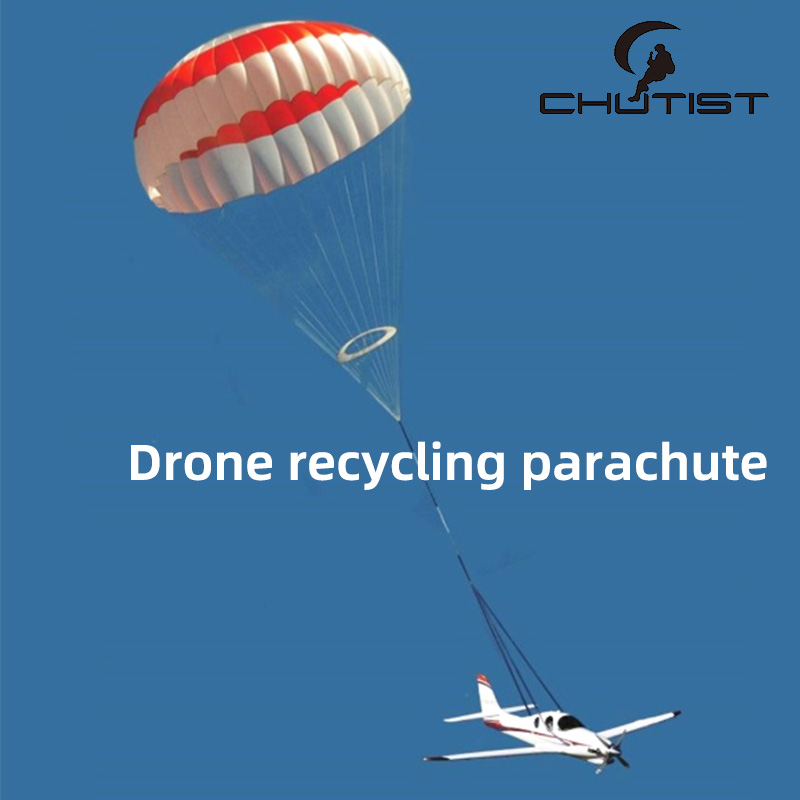
Deployment Methods
Aviation parachutes: Typically deployed via pilot chute, spring-assisted ejection, or automatic static line. Focus on smooth openings and minimal shock for human occupants.
Industrial parachutes: May use pyrotechnic deployment, static line, or mechanical ejection to accommodate heavier payloads. Deployment speed is balanced against load stability.
Performance Considerations
Weight and Load Capacity
Aviation parachutes: Designed for 50–120 kg (person plus gear) or small UAVs.
Industrial parachutes: Can handle hundreds to thousands of kilograms, depending on cargo type.
Descent Rate
Aviation: Typically 4–6 m/s to reduce impact on humans.
Industrial: Adjustable via canopy size and number; higher descent rates tolerated for non-human payloads.
Stability
Aviation parachutes emphasize minimal oscillation and canopy control.
Industrial parachutes prioritize load stabilization to prevent equipment damage.
Environmental and Operational Factors
| Factor | Aviation Parachute | Industrial Parachute |
|---|---|---|
| Environmental Resistance | Moderate (indoors, controlled airspace, outdoor jumps) | High (outdoor deployment, extreme temperatures, UV, moisture) |
| Usage Cycles | Frequent, repeated training and sports | Variable; may be single-use or repeated depending on mission |
| Maintenance | Regular inspections, moderate wear | Heavy-duty maintenance, replacement after high-stress deployments |
Common Applications
Aviation Parachutes
Skydiving and sports parachuting
Emergency egress for pilots and aircrew
UAV recovery systems
Flight training programs
Industrial Parachutes
Cargo airdrops for military, humanitarian, or commercial operations
Equipment delivery in remote or hard-to-access locations
Aerospace testing, such as high-altitude drop tests
Large UAV payload recovery or industrial drone operations
Material and Lifecycle Considerations
Aviation parachutes are typically made from lightweight nylon or polyester blends to balance packability and shock absorption. They are designed for high deployment frequency with moderate wear.
Industrial parachutes use reinforced fabrics, thicker suspension lines, and coatings to withstand abrasion, UV, and environmental exposure. Lifecycle depends on load stress and frequency of heavy deployments rather than repeated cycles of human jumps.
Regulatory and Certification Differences
Aviation parachutes often require certification from authorities like FAA, EASA, or CAAC for personnel use.
Industrial parachutes may follow cargo or UAV safety standards, with certification focusing on material integrity, load capacity, and environmental testing rather than human safety metrics.
Manufacturers experienced in both domains, such as Nanjing Hongguang General Aviation Equipment Technology Co., Ltd., design systems that meet operational and regulatory requirements for their respective applications.
Summary Table: Industrial vs Aviation Parachutes
| Feature | Aviation Parachute | Industrial Parachute |
|---|---|---|
| Primary Purpose | Personnel safety, UAV recovery | Cargo, equipment, industrial payloads |
| Typical Load | 50–120 kg | 100–2000+ kg |
| Canopy Material | Lightweight nylon/polyester | Reinforced nylon/polyester |
| Deployment Method | Pilot chute, spring ejection | Static line, pyrotechnic, mechanical ejection |
| Descent Rate | 4–6 m/s | Adjustable, can be higher |
| Stability Focus | Minimal oscillation for human control | Load stability for equipment protection |
| Certification | FAA, EASA, CAAC (personnel) | Material & load compliance, industrial standards |
| Maintenance | Frequent inspection, moderate wear | Heavy-duty inspection, environmental durability |
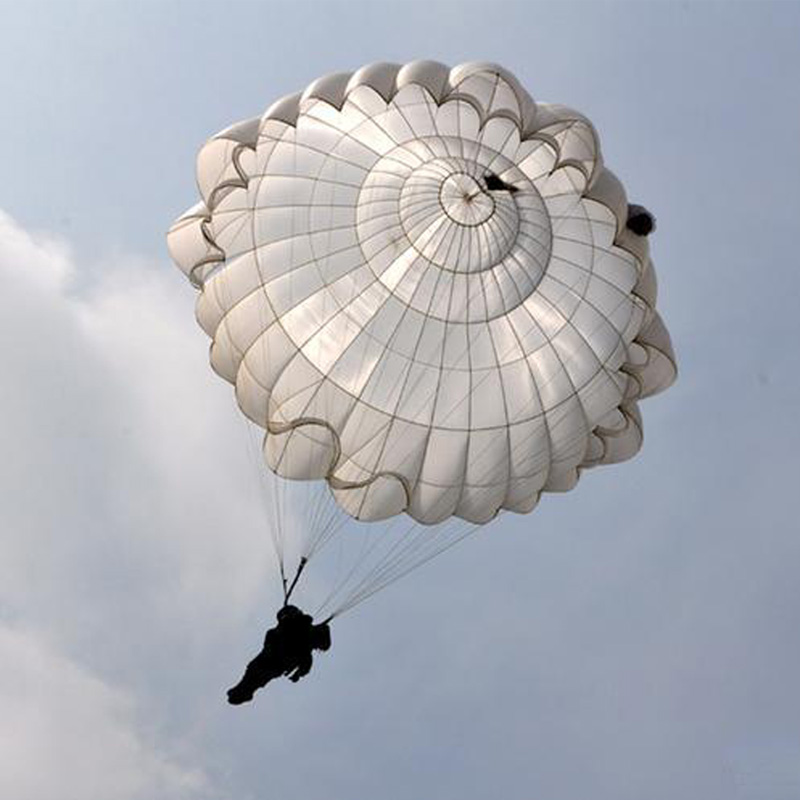
Industrial and aviation parachutes serve different operational needs despite the shared principle of controlled descent. Aviation parachutes prioritize human safety, predictable deployment, and maneuverability, while industrial parachutes focus on high payload capacity, environmental resistance, and load stability.
Selecting the appropriate parachute type requires considering load, deployment method, environmental conditions, and regulatory compliance. Experienced manufacturers, such as Nanjing Hongguang General Aviation Equipment Technology Co., Ltd., provide tailored solutions for both aviation and industrial parachutes, leveraging decades of expertise to ensure safety, reliability, and operational efficiency across diverse applications.


