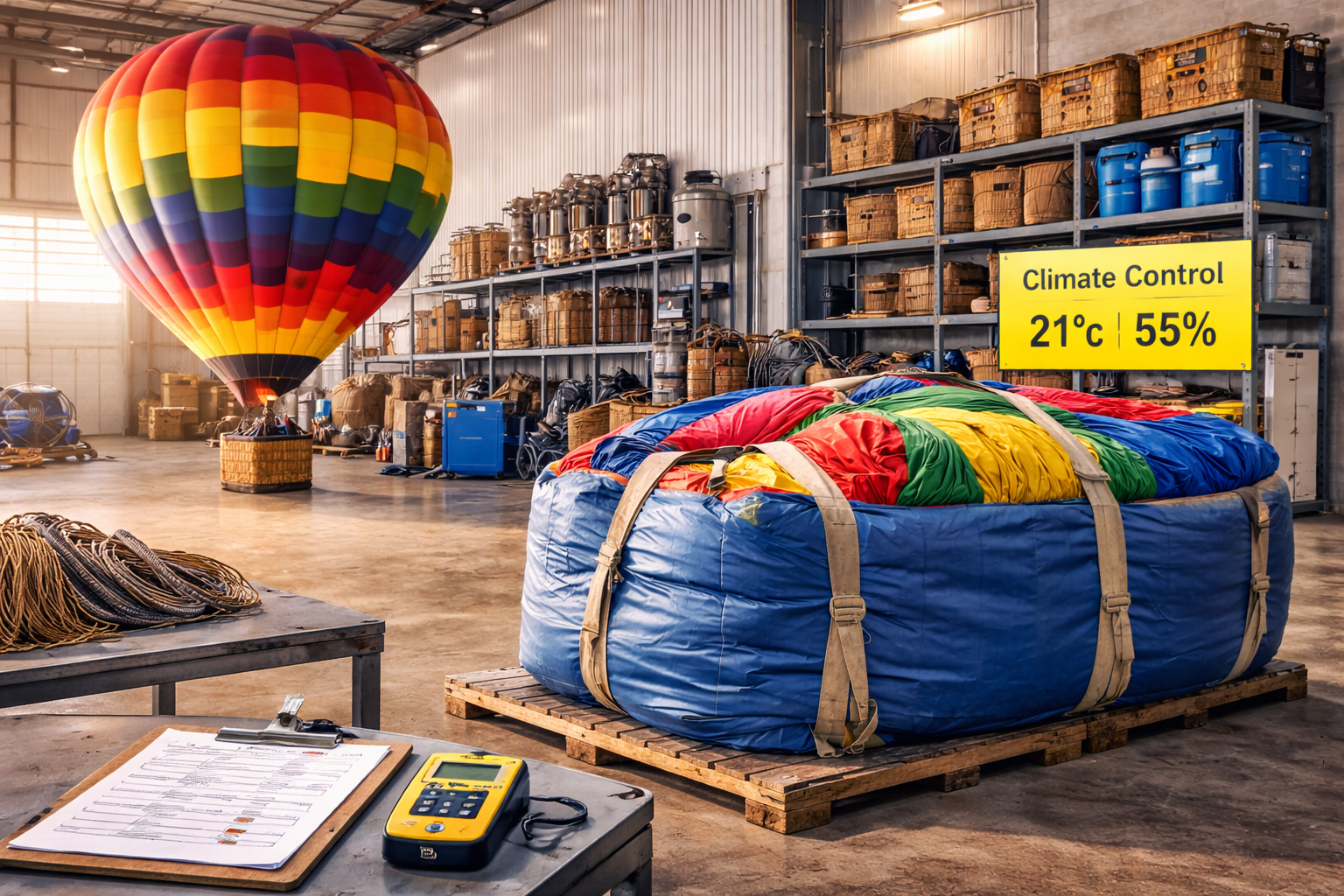
Storage Requirements for Hot Air Balloons
Hot air balloons are complex aviation systems composed of textile envelopes, load-bearing structures, burner assemblies, and fuel systems. While flight safety often receives primary attention, hot air balloon storage requirements play an equally critical role in maintaining structural integrity, airworthiness, and long-term operational reliability.
Improper storage conditions can lead to fabric degradation, coating failure, corrosion of metal components, and reduced service life. This article explains the environmental, technical, and procedural requirements for storing hot air balloons in professional aviation environments.
1. Why Storage Conditions Matter in Balloon Aviation
A hot air balloon envelope is typically constructed from high-strength nylon or polyester fabrics coated with polyurethane or silicone for heat resistance and air retention. These materials are sensitive to:
Ultraviolet (UV) radiation
Moisture and condensation
Microbial growth
Prolonged compression
Chemical contamination
Unlike fixed-wing aircraft stored in hangars, balloon systems are frequently packed into storage bags after each flight. This repeated folding and compression increases the importance of correct storage procedures.
Proper storage:
Preserves fabric tensile strength
Prevents coating breakdown
Protects burner and fuel components
Maintains certification compliance
Extends operational lifespan
2. Environmental Requirements for Hot Air Balloon Storage
2.1 Temperature Control
Recommended storage temperature range:
10°C to 25°C (50°F to 77°F)
Avoid freezing conditions
Avoid prolonged exposure above 35°C (95°F)
High temperatures accelerate polymer degradation in coated fabrics. Extremely low temperatures can stiffen materials and increase brittleness during deployment.
Climate-controlled indoor storage is preferred for commercial and training operators.
2.2 Humidity Levels
Relative humidity should ideally remain:
Below 60%
Free from condensation
Excess humidity increases the risk of:
Mold growth inside fabric folds
Corrosion of burner frames
Degradation of stitching threads
Damage to wicker basket materials
After flights involving morning dew or water landings, complete drying before packing is mandatory.
2.3 UV Exposure
Even when deflated, prolonged exposure to sunlight during storage can weaken envelope fabrics.
Storage locations must:
Be fully shaded
Avoid transparent roofing materials
Prevent indirect UV reflection
Ultraviolet radiation gradually reduces fabric tear resistance, affecting airworthiness margins.
3. Storage Procedures for the Balloon Envelope
3.1 Drying Before Packing
The envelope must be:
Completely dry internally and externally
Free of sand, dust, and organic debris
Inspected for moisture in corner panels
Recommended practice:
Inflate partially for drying when necessary
Use forced ventilation in humid climates
Packing a damp envelope significantly increases the risk of microbial damage.
3.2 Folding and Compression Guidelines
Repeated compression affects fabric memory and coating durability. Best practices include:
Avoid excessive over-tight packing
Use manufacturer-recommended folding patterns
Distribute folds across different panel sections over time
Long-term compression in a single configuration can create stress points.
3.3 Storage Bags and Containers
Balloon envelopes are typically stored in:
Heavy-duty breathable fabric bags
Reinforced transport containers
Ventilated aviation storage rooms
Plastic airtight containers are not recommended unless humidity control systems are in place.
4. Burner and Fuel System Storage Requirements
The burner assembly contains:
Stainless steel frames
Fuel hoses
Pressure regulators
Ignition systems
Improper storage may lead to internal corrosion or seal degradation.
4.1 Fuel Tank Management
Before storage:
Depressurize tanks
Close valves securely
Inspect O-rings and seals
Long-term storage requires tanks to be kept in:
Dry areas
Away from direct sunlight
Properly ventilated spaces
4.2 Corrosion Prevention
Metal components should be:
Cleaned after each operation
Checked for fuel residue
Stored off the ground
In coastal or humid regions, corrosion protection measures may include:
Light protective coatings
Dehumidified storage cabinets
5. Basket and Structural Component Storage
The basket, typically constructed from wicker over a steel or aluminum frame, requires:
Protection from moisture
Avoidance of pest infestation
Adequate ventilation
Extended storage in damp environments may weaken wicker fibers and compromise structural resilience.
Recommended measures:
Elevate from floor surfaces
Inspect periodically for mold
Avoid stacking heavy equipment on top
6. Long-Term Storage vs Short-Term Storage
Short-Term (Days to Weeks)
Standard packing acceptable
Indoor dry storage sufficient
Regular visual checks recommended
Long-Term (Months to Seasonal)
Climate-controlled storage preferred
Periodic re-packing to redistribute folds
Annual inspection before returning to service
Functional burner test prior to next flight season
Seasonal tourism operators should integrate storage inspection into annual maintenance schedules.
7. Regulatory and Airworthiness Considerations
Aviation authorities in various countries require that:
Equipment be maintained according to manufacturer guidelines
Storage not compromise structural integrity
Inspection records be documented
While storage itself may not always require certification, improper storage that leads to material degradation can affect:
Airworthiness certificates
Insurance compliance
Operational authorization
Professional operators maintain storage logs as part of maintenance documentation.
8. Storage in Commercial and Training Environments
Flight schools and tourism operators often manage multiple balloon systems simultaneously.
Recommended infrastructure includes:
Dedicated aviation hangars
Shelving systems for burners and tanks
Climate monitoring devices
Clearly labeled storage areas
Large-scale operators benefit from standardized storage protocols to reduce variability in material wear.
Manufacturers with long-term involvement in balloon engineering, such as Nanjing Hongguang General Aviation Equipment Technology Co., Ltd., emphasize that storage procedures should be considered part of the operational safety lifecycle rather than a secondary logistical task.
9. Common Storage Mistakes to Avoid
Packing the envelope while damp
Storing near chemicals or fuels
Leaving fuel tanks pressurized
Ignoring seasonal humidity changes
Compressing the envelope excessively
Failing to inspect before reactivation
These errors often lead to premature fabric failure or component replacement.
10. Practical Checklist for Hot Air Balloon Storage Requirements
Before storage:
Dry the envelope completely
Inspect stitching and load tapes
Clean burner assembly
Depressurize fuel system
Document condition
During storage:
Maintain controlled temperature
Monitor humidity
Prevent UV exposure
Avoid mechanical compression stress
Before reactivation:
Perform visual inspection
Check fabric integrity
Conduct burner system test
Verify fuel connections
Conclusion
Understanding hot air balloon storage requirements is essential for maintaining structural durability, safety compliance, and long-term operational reliability. Balloon systems rely heavily on textile performance and corrosion-resistant components, both of which are directly influenced by environmental exposure during storage.
Proper temperature control, humidity management, UV protection, and systematic inspection routines significantly reduce material degradation and lifecycle costs. For aviation institutions, training schools, and tourism operators, storage should be treated as a technical discipline rather than a simple logistical step.
When correctly implemented, professional storage protocols ensure that hot air balloons remain safe, airworthy, and operationally ready across multiple seasons.