
Hot Air Balloon Price Breakdown: What Affects Costs in 2025?

The price of a hot air balloon can vary significantly depending on design, certification, intended use, and operational requirements. In 2025, as aviation regulations tighten and customization demand grows, understanding what drives hot air balloon costs has become increasingly important for buyers worldwide.
This guide breaks down the major cost factors behind hot air balloon pricing, helping operators, investors, and tourism businesses make informed purchasing decisions.
Why Hot Air Balloon Prices Vary Widely
Unlike mass-produced consumer products, hot air balloons are regulated aviation systems. Each unit integrates multiple certified components and is often customized for specific applications. As a result, pricing reflects not only materials and labor but also compliance, testing, and long-term operational reliability.
Core Components That Determine Price
Envelope (Balloon Fabric)
The envelope is the largest and most expensive component of a hot air balloon.
Cost factors include:
Total envelope volume and surface area
Fabric type and porosity level
Heat-resistant crown materials
UV-resistant coatings
Larger envelopes require more material and reinforcement, increasing both manufacturing time and cost.
Burner System
Burners provide the thermal lift required for flight.
Price is influenced by:
Single vs dual burner configurations
Heat output capacity
Ignition and redundancy systems
Material quality and durability
High-performance burners designed for commercial operations are more expensive but offer greater reliability.
Basket (Gondola)
Basket pricing depends on:
Passenger capacity
Structural reinforcement
Materials and craftsmanship
Integrated safety features
Commercial baskets designed for frequent use typically cost more than recreational models.
Fuel System
Fuel-related costs include:
Certified propane cylinders
Valves and regulators
Hose systems and mounting hardware
Compliance with pressure and safety standards directly affects pricing.
Certification and Compliance Costs
Why Certification Impacts Price
Certification ensures that the balloon meets aviation authority standards for safety and performance.
Associated costs may include:
Design approval and documentation
Structural and material testing
Trial flights and inspections
Regulatory submission fees
Certified balloons generally cost more than uncertified alternatives but are essential for commercial use.
International Compliance Considerations
For export markets, additional costs may arise from:
Adaptation to local aviation regulations
Multilingual documentation
Third-party inspections
Suppliers with international certification experience can reduce compliance-related delays and expenses.
Customization and Special Design Costs
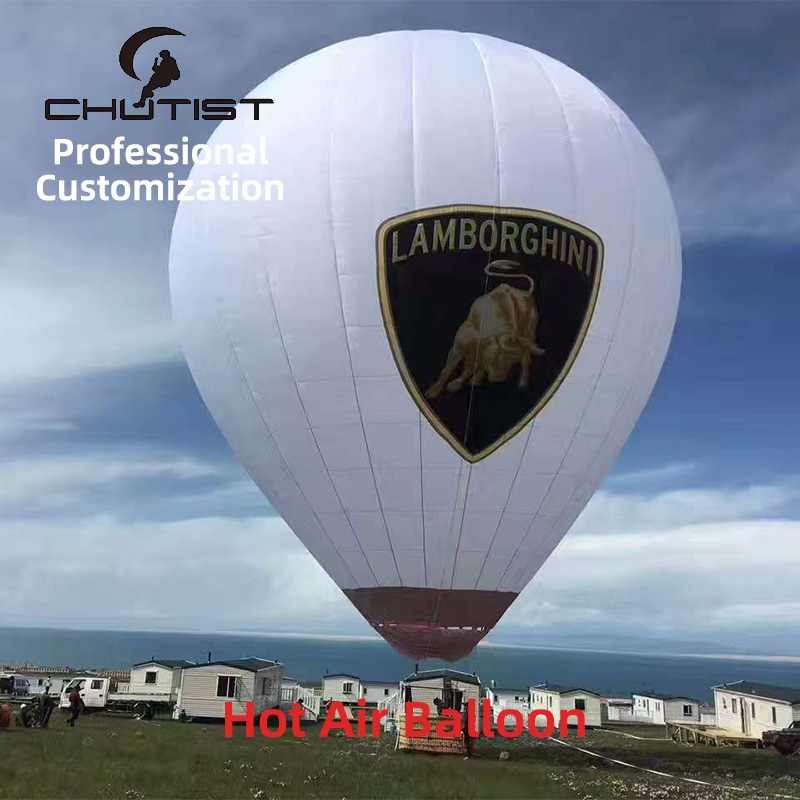
Customization is a major price driver.
Visual Customization
Custom colors and patterns
Branding and logo application
Special coatings
These elements increase labor time and material usage.
Structural Customization
Special-shaped envelopes
Tethered balloon configurations
Increased lift capacity
Engineering analysis and testing for non-standard designs add to overall cost.

Intended Use and Operational Profile
Recreational vs Commercial Use
Balloons designed for commercial sightseeing or training typically cost more due to:
Higher durability requirements
Enhanced safety margins
More frequent inspection cycles
Lower-cost recreational balloons may not be suitable for high-frequency operations.
Tethered vs Free-Flying Balloons
Tethered balloon systems often include:
Additional tether hardware
Ground anchoring systems
Load monitoring equipment
These elements increase upfront investment.
Maintenance and Lifecycle Cost Considerations
Initial Price vs Total Cost of Ownership
A lower purchase price does not always mean lower long-term cost.
Lifecycle costs include:
Maintenance and inspections
Fabric repairs or replacement
Spare parts availability
Downtime risk
High-quality balloons often deliver better long-term value despite higher upfront costs.
Labor, Manufacturing Location, and Supply Chain
Manufacturing Expertise
Experienced manufacturers invest heavily in:
Skilled labor
Quality control systems
Testing infrastructure
These investments are reflected in pricing but improve reliability.
Supply Chain Stability
Material sourcing, logistics, and export handling can influence final cost, especially for international buyers.
Typical Price Ranges in 2025 (Indicative)
While prices vary widely by region and specification, general trends include:
Small recreational balloons: lower entry-level pricing
Mid-size commercial balloons: moderate to high pricing
Large-capacity or custom balloons: premium pricing
Exact pricing depends on configuration, certification, and supplier capability.
Evaluating Price Quotes Effectively
When comparing quotes, buyers should look beyond headline price and evaluate:
Included certifications
Scope of after-sales support
Warranty terms
Spare parts availability
Documentation completeness
Transparent pricing indicates a professional supplier.
Industry Perspective on Pricing
Manufacturers with long-standing aviation backgrounds tend to offer pricing that reflects full compliance and operational reliability. For example, Nanjing Hongguang General Aviation Equipment Technology Co., Ltd. participates in the production of certified hot air balloon systems for tourism, aviation sports, and specialized applications, illustrating how engineering depth and compliance capability influence overall cost structure.

Common Pricing Misunderstandings
Assuming all balloons are priced the same
Ignoring certification-related expenses
Underestimating customization impact
Focusing solely on upfront cost
Understanding these factors helps avoid budget overruns.
Hot air balloon pricing in 2025 reflects a combination of materials, engineering, certification, customization, and long-term operational considerations. Buyers who understand what drives costs are better positioned to select balloon systems that meet both safety and business requirements.
Rather than focusing on the lowest price, evaluating value, compliance, and lifecycle cost leads to more sustainable and reliable balloon operations.


