
Launch and Recovery Procedures for Hot Air Balloons
Launch and Recovery Procedures for Hot Air Balloons
Introduction
Launch and recovery procedures for hot air balloons are critical operational phases that directly influence flight safety, equipment longevity, and ground crew coordination. Although hot air balloon flight appears simple compared to powered aircraft operations, the inflation, takeoff, landing, and post-flight handling processes require structured planning and disciplined execution.
Each stage involves:
Environmental assessment
Equipment inspection
Crew coordination
Thermal control
Passenger management (for commercial flights)
This technical guide explains the standardized procedures, safety considerations, and operational logic behind hot air balloon launch and recovery activities.
Overview of Hot Air Balloon Ground Operations
Hot air balloon operations consist of four primary phases:
Pre-launch preparation
Cold and hot inflation
Launch (takeoff)
Landing and recovery
Unlike conventional aircraft, balloons do not operate from fixed runways. Instead, launch and landing zones are selected based on wind direction, terrain conditions, and airspace restrictions.
Successful operations depend on:
Wind speed within safe limits
Clear obstacles downwind
Adequate landing alternatives
Trained ground crew
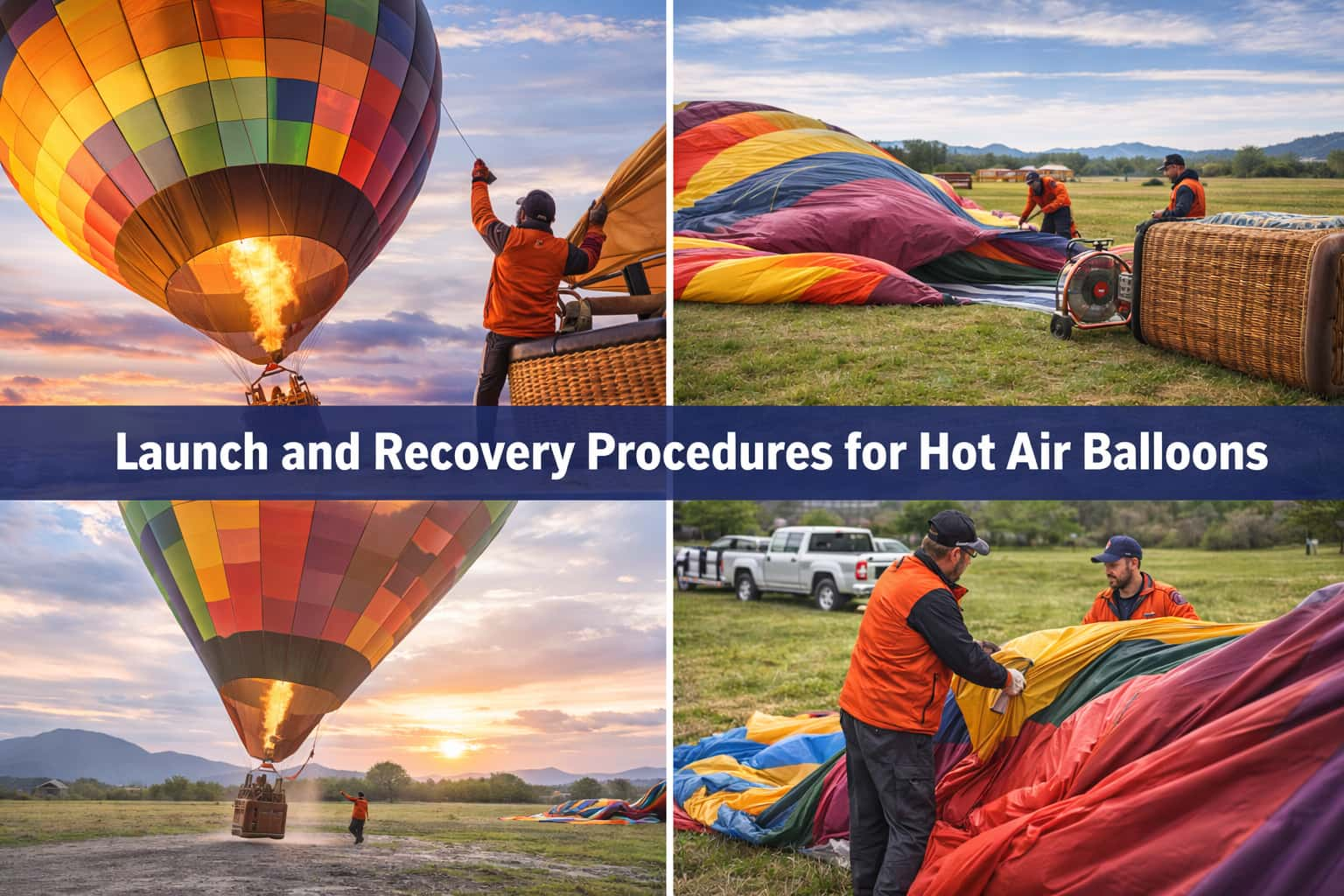
Pre-Launch Preparation
Site Selection
Launch site evaluation typically includes:
Surface flatness and clearance
Absence of overhead power lines
Safe distance from populated areas
Wind direction and consistency
Accessibility for recovery vehicles
Light surface winds (generally below operational limits defined by the manufacturer or aviation authority) are preferred for safe inflation and controlled ascent.
Equipment Inspection
Before inflation, the following components are inspected:
Envelope fabric condition
Load tapes and seam integrity
Burner system and fuel lines
Fuel tank pressure levels
Basket structure and attachment points
Suspension cables
Any visible fabric tear, burner malfunction, or fuel leakage requires corrective action before proceeding.
Pre-flight inspection logs are typically maintained for regulatory compliance and safety tracking.
Inflation Procedures
Inflation is conducted in two stages:
1. Cold Inflation (Fan Inflation)
The envelope is laid out downwind and partially filled using high-capacity fans.
Key considerations:
Proper alignment with wind direction
Crown line control to prevent twisting
Monitoring for fabric entanglement
Even air distribution within envelope
Cold inflation gives the balloon its initial shape while maintaining low internal pressure.
2. Hot Inflation (Burner Activation)
Once partially inflated, the burner system is activated to heat internal air.
Important factors:
Controlled flame bursts
Gradual temperature increase
Monitoring crown stability
Preventing envelope contact with ground obstacles
As internal air temperature rises, buoyancy increases and the envelope stands upright.
Crew members stabilize the basket during this transition phase.
Launch (Takeoff) Procedure
Final Pre-Launch Check
Before release:
Passenger briefing (if applicable)
Fuel valve confirmation
Wind direction verification
Airspace clearance confirmation
Ground crew readiness
Clear communication between pilot and ground team is essential.
Lift-Off
The balloon ascends when:
Internal air temperature generates sufficient lift
Ballast conditions are stable
Surface winds remain within safe range
Unlike powered aircraft, the ascent rate is controlled primarily by burner modulation.
Initial climb is gradual to allow:
Wind drift assessment
Obstacle clearance
Flight path evaluation
In-Flight Considerations Related to Recovery Planning
Although recovery occurs after landing, it must be planned during flight.
The pilot continuously evaluates:
Wind direction changes at varying altitudes
Available open landing areas
Surface conditions
Proximity to roads for ground access
Descent planning begins well before landing to ensure controlled approach and safe ground coordination.
Landing Procedures
Landing is often the most dynamic part of balloon operation.
Descent Control
Descent rate is managed by:
Reducing burner input
Venting hot air via crown vent
Monitoring vertical speed
Controlled descent prevents hard landings and structural strain.
Surface Contact
Depending on wind conditions, landing types may include:
Stand-up landing (light wind)
Drag landing (moderate wind)
During landing:
Passengers adopt brace positions
Pilot maintains basket stability
Ground crew approaches only after full stop
The basket may tilt slightly depending on surface irregularities.
Recovery Procedures
Envelope Deflation
After landing:
Crown vent is fully opened
Internal hot air is released
Envelope collapses gradually downwind
Controlled deflation prevents fabric damage.
Packing and Handling
Proper recovery includes:
Avoiding fabric dragging over abrasive surfaces
Protecting envelope from moisture
Inspecting for tears or burn marks
Securing fuel tanks
Folding envelope according to manufacturer guidelines
Improper packing significantly reduces fabric lifespan.
Ground Transportation
Recovery vehicles transport:
Basket
Envelope bag
Fuel tanks
Ground equipment
Secure loading prevents structural or fabric stress during transport.
Safety Considerations During Launch and Recovery
Operational safety requires attention to:
Wind speed limits
Thermal exposure limits
Obstacle proximity
Passenger weight distribution
Crew coordination
Common risk factors include:
Sudden gusts during inflation
Improper crown control
Uneven terrain during landing
Overheating during hot inflation
Adherence to procedural discipline reduces operational risk.
Environmental Factors Influencing Procedures
High Wind Conditions
Increased envelope instability
Higher landing impact forces
Greater risk of dragging
Operations may be postponed when winds exceed safe thresholds.
Cold Weather Operations
Increased fuel consumption
Slower fabric flexibility
Longer hot inflation time
High-Temperature Environments
Reduced lift margin
Faster envelope thermal aging
Environmental awareness improves operational safety margins.
Training and Standardization
Structured training programs emphasize:
Inflation choreography
Emergency descent procedures
Rapid deflation techniques
Crew communication protocols
Experienced manufacturers and engineering-oriented producers, including Nanjing Hongguang General Aviation Equipment Technology Co., Ltd., typically integrate operational testing feedback into procedural guidelines to improve safety consistency across commercial and training environments.
Standard operating procedures (SOPs) are often developed in alignment with civil aviation authority regulations.
Common Operational Errors
Typical procedural mistakes include:
Launching in marginal wind conditions
Inadequate crown line control
Poor communication between pilot and crew
Insufficient landing area assessment
Delayed deflation after touchdown
These errors can result in equipment damage or safety incidents.
Best Practices for Equipment Preservation
To extend system longevity:
Avoid excessive burner heating during inflation
Use protective ground sheets on abrasive terrain
Conduct post-flight inspection after each operation
Store envelope in dry, UV-protected environments
Log operational cycles accurately
Launch and recovery discipline directly affects envelope service life.
Conclusion
Launch and recovery procedures for hot air balloons represent the most safety-critical phases of balloon operations. While flight itself may appear calm and controlled, ground operations require structured preparation, coordinated teamwork, and environmental awareness.
A systematic approach that integrates:
Pre-flight inspection
Controlled inflation
Safe lift-off
Planned descent
Structured recovery
ensures both operational safety and equipment preservation.
For aviation institutions, tourism operators, and research organizations, disciplined launch and recovery practices are fundamental to maintaining airworthiness, minimizing lifecycle costs, and ensuring safe passenger experience in hot air balloon operations.


