
Hot Air Balloon Envelope Material Comparison

The envelope is the primary lift-generating structure of a hot air balloon. Its material selection directly influences flight performance, durability, safety, and operating cost. Understanding the differences between common envelope materials helps operators, manufacturers, and first-time buyers make informed decisions. This technical guide compares the most widely used hot air balloon envelope materials.
Function of the Envelope Material
The envelope material must perform several critical functions:
Contain heated air efficiently
Withstand high temperatures near the crown and burner zone
Resist UV exposure and environmental degradation
Maintain structural integrity under repeated thermal cycles
Material performance directly affects both safety margins and service life.
Common Envelope Materials
1. Ripstop Nylon
Characteristics:
Lightweight and flexible
High tensile strength due to ripstop weaving
Commonly used in standard balloons
Advantages:
Good strength-to-weight ratio
Easy handling and packing
Lower manufacturing cost
Limitations:
Moderate UV resistance
Shorter service life under intensive commercial use
2. Polyester Fabric
Characteristics:
Higher melting point than nylon
Better resistance to heat deformation
Slightly heavier structure
Advantages:
Improved heat tolerance
Better dimensional stability
Longer lifespan in frequent operations
Limitations:
Increased weight may reduce lift efficiency
Higher production cost
3. Coated Fabrics
Characteristics:
Base fabric treated with heat-resistant or airtight coatings
Enhanced performance near burner zones
Advantages:
Reduced air permeability
Improved thermal efficiency
Extended service life
Limitations:
Higher material cost
Slightly reduced flexibility
Material Zoning in Balloon Envelopes
Most modern envelopes use multi-material zoning:
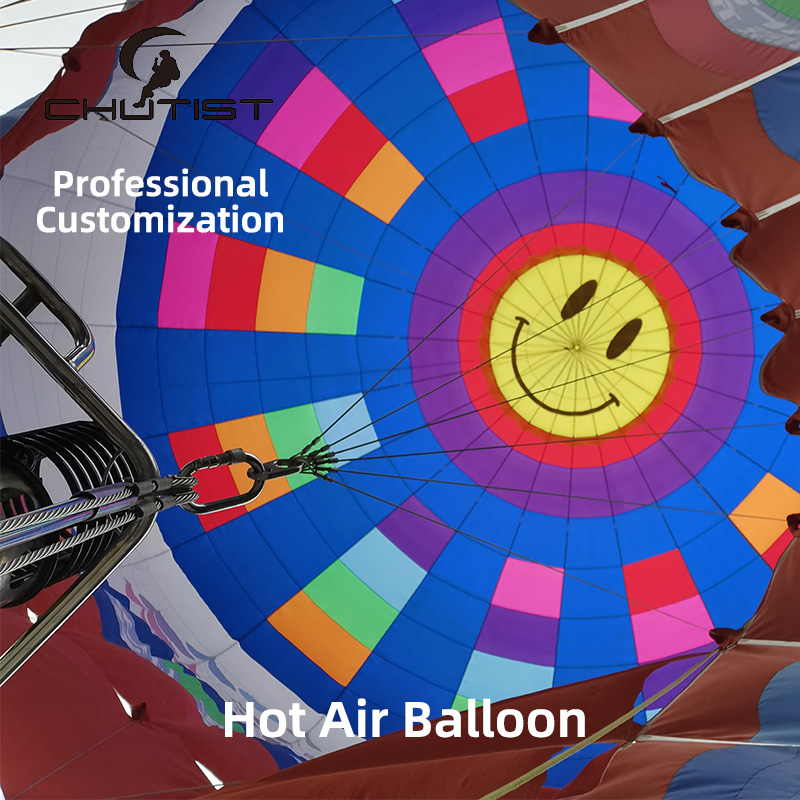
Upper panels: lightweight nylon for reduced weight
Lower panels (skirt and mouth): heat-resistant polyester or coated fabrics
Reinforced load areas: high-strength materials at stress points
This approach balances performance, safety, and durability.
Durability and Service Life Comparison
| Material Type | Heat Resistance | UV Resistance | Typical Service Life |
|---|---|---|---|
| Ripstop Nylon | Moderate | Moderate | 300–500 flight hours |
| Polyester | High | Good | 500–800 flight hours |
| Coated Fabric | Very high | Excellent | 800+ flight hours |
Actual service life varies based on usage frequency, environment, and maintenance.
Maintenance and Inspection Considerations
Regular fabric inspection for thinning or discoloration
Monitoring heat exposure near the burner area
Proper drying and storage after flights
Avoiding prolonged UV exposure when not in use
Material longevity depends as much on maintenance as on fabric selection.
Operational Impact of Material Choice
Envelope material affects:
Fuel efficiency
Maximum payload capacity
Inflation and deflation time
Packing weight and handling effort
Commercial operators often prioritize durability, while training or recreational users may prefer lightweight configurations.
Manufacturer Material Selection Practices
Experienced manufacturers such as Nanjing Hongguang General Aviation Equipment Technology Co., Ltd. apply material zoning, reinforced stitching, and controlled fabric sourcing to ensure consistent envelope quality and safety performance.
Hot air balloon envelope material selection should consider:
Heat resistance and thermal stability
UV durability and environmental exposure
Weight and lift efficiency
Expected flight frequency and operational intensity
Understanding material differences allows operators to balance safety, performance, and long-term cost, ensuring reliable balloon operation throughout the envelope’s service life.


