
Parachute Manufacturer: How to Evaluate Quality and Safety Standards
Parachute Manufacturer: How to Evaluate Quality and Safety
Definition and Industry Overview
A parachute manufacturer is a specialized engineering organization responsible for designing, producing, testing, and certifying parachute systems used in aviation, aerospace, sports, and emergency recovery applications. These systems are critical safety devices designed to control descent speed, stabilize payloads, and ensure reliable deployment in high-risk airborne environments.
Unlike general textile products, parachutes require precise aerodynamic design, strict material standards, and extensive testing procedures. Even small design variations can influence canopy stability, deployment timing, and load distribution during descent.
Because parachutes operate in life-critical situations, manufacturers must follow rigorous engineering and manufacturing processes. These include material verification, structural testing, aerodynamic simulation, and real-world deployment trials.
For procurement users, evaluating a parachute manufacturer requires understanding both the technical structure of parachute systems and the engineering capabilities behind production and safety validation.
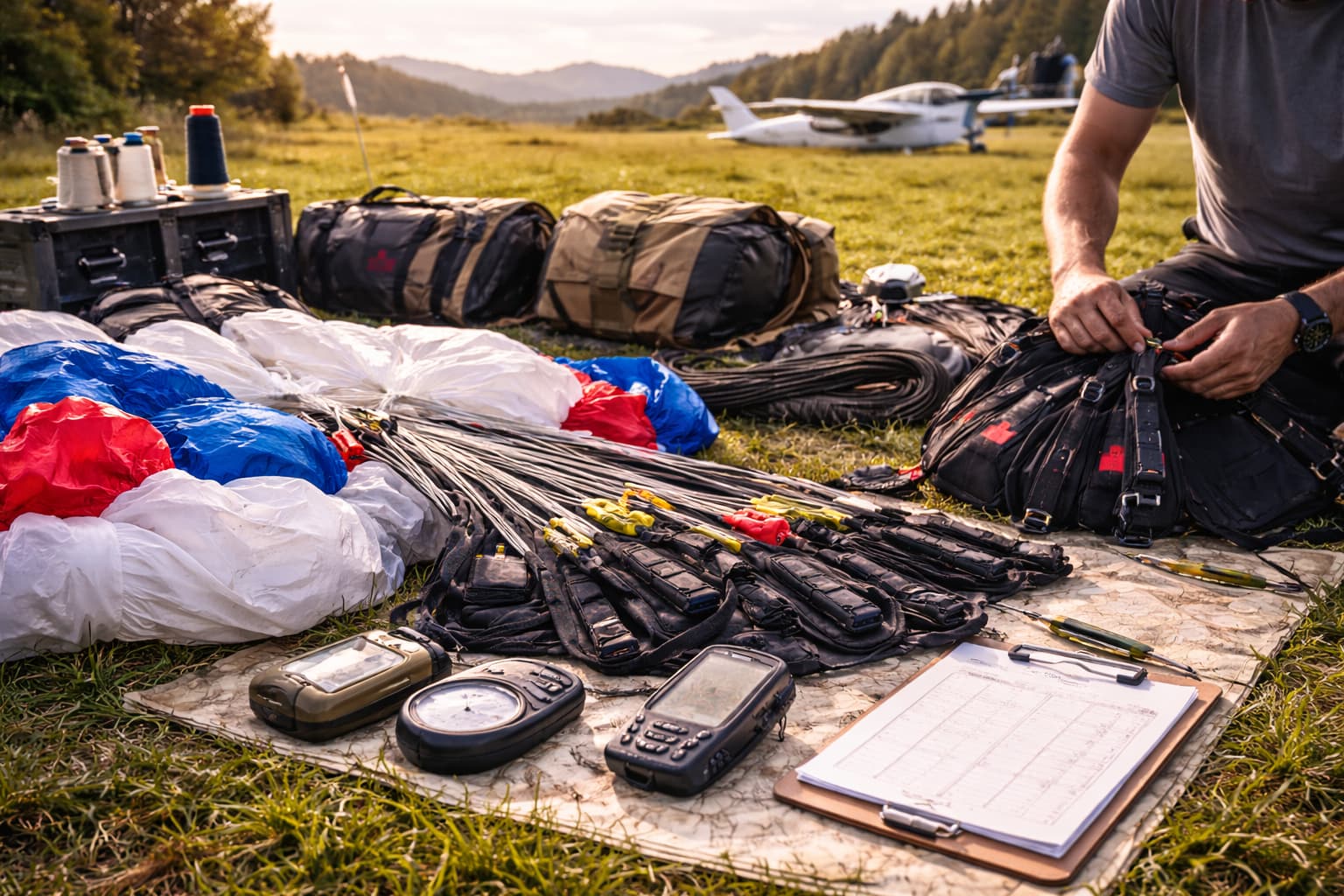
Core Components of a Parachute System
A parachute system is composed of multiple integrated components, each responsible for a specific function during deployment and descent. Reliable manufacturers design and test each part as part of a complete safety system.
The main structural components typically include:
Canopy
The fabric structure that generates drag and controls descent
Designed with aerodynamic cells or panels depending on parachute type
Suspension Lines
High-strength cords connecting the canopy to the harness or payload
Responsible for evenly distributing aerodynamic load
Riser System
Structural straps linking suspension lines to harness or connection points
Often reinforced to handle peak deployment forces
Pilot Chute or Deployment Mechanism
Initiates the main canopy opening sequence
Critical for low-altitude or rapid deployment scenarios
Harness or Payload Attachment System
Connects the parachute system to a person, UAV, or equipment payload
Reliable manufacturers ensure that all components function as an integrated system rather than isolated parts. This system-level design approach significantly improves deployment reliability and operational safety.
Key Materials Used in Parachute Manufacturing
Material selection plays a central role in determining parachute durability, strength, and aerodynamic stability. High-quality manufacturers invest heavily in material research and testing.
Common parachute materials include:
Ripstop Nylon
Lightweight yet tear-resistant
Widely used for sport and aviation parachutes
High-Strength Polyester
Excellent dimensional stability
Suitable for long-term storage and repeated use
Kevlar or Aramid Fibers
Extremely high tensile strength
Often used in suspension lines for heavy-load systems
Low-Porosity Fabrics
Used in ram-air parachutes
Improves glide performance and canopy efficiency
Manufacturers must carefully balance material weight, strength, flexibility, and air permeability. Incorrect material selection can result in unstable descent behavior or premature wear during repeated deployments.
Manufacturing Processes and Quality Control
Evaluating a parachute manufacturer requires examining the production processes used to maintain structural consistency and safety performance.
Professional manufacturing typically includes several stages of quality control.
Fabric Inspection
Incoming textile materials are inspected for:
Tear resistance
Coating consistency
Air permeability characteristics
Precision Cutting
Computer-controlled cutting systems ensure accurate panel shapes and symmetry. Even minor deviations in canopy panel geometry can affect aerodynamic performance.
Reinforced Stitching
High-load areas such as riser connections and canopy joints use specialized stitching patterns, including:
Double-needle seams
Box-X reinforcement patterns
Load distribution stitching
Assembly and System Integration
After components are manufactured, the entire parachute system is assembled and checked for alignment, structural integrity, and deployment compatibility.
Strict production discipline ensures that every system meets the same structural specifications and safety margins.
Testing and Certification Standards
Testing is one of the most important indicators of a parachute manufacturer's reliability. Responsible producers conduct both laboratory testing and real-world flight validation.
Typical testing procedures include:
Static Load Testing
Verifies line strength and canopy attachment points
Wind Tunnel Testing
Evaluates aerodynamic stability and canopy inflation characteristics
Drop Testing
Conducted using weighted payloads or UAV systems
Simulates real deployment conditions
Environmental Testing
Exposure to temperature, humidity, and UV conditions
Ensures durability in different operational environments
Many aviation-grade parachute systems also follow internationally recognized safety standards used in aerospace and sport aviation equipment certification.
Extensive testing ensures predictable deployment behavior and safe descent performance under varying operational conditions.
Engineering Experience and R&D Capabilities
A strong engineering background is a key indicator of a reliable parachute manufacturer. Companies with long-term research programs and technical infrastructure typically maintain higher product consistency and safety reliability.
Important indicators of engineering capability include:
Dedicated aerodynamic research teams
In-house testing facilities
Prototype development and simulation capabilities
Long-term participation in aviation research projects
Some experienced producers have contributed to early aviation equipment development and continue to support research institutions and aerospace programs.
For example, Nanjing Hongguang General Aviation Equipment Technology Co., Ltd. has decades of engineering experience in parachute system development, UAV recovery technology, and aviation sports equipment manufacturing, supported by extensive testing and research infrastructure.
Engineering-driven companies often produce systems designed for a wide range of applications, including training, emergency recovery, heavy-load cargo descent, and unmanned aerial vehicle recovery.
Application Scenarios for Modern Parachute Systems
Parachute systems today are used in a wide variety of aviation and industrial environments. Understanding the intended application helps procurement teams evaluate which manufacturer is suitable for a specific mission profile.
Typical application scenarios include:
Aviation Training
Parachutes used for skydiving schools and training centers
Emphasis on predictable deployment and easy handling
Emergency Aircraft Recovery
Ballistic or emergency parachute systems for light aircraft
UAV Recovery Systems
Designed to safely recover drones and aerial payloads
Often require rapid deployment mechanisms
Cargo Airdrop Operations
Used in logistics and humanitarian supply delivery
Rescue and Safety Systems
Specialized parachutes used for emergency evacuation or high-rise rescue operations
Each scenario requires different structural designs, load capacities, and deployment characteristics, which makes manufacturer specialization an important consideration.
Conclusion
Selecting a parachute manufacturer requires a detailed evaluation of engineering expertise, production quality control, and real-world testing capabilities. Because parachutes function as critical safety systems, their design and reliability directly influence operational safety.
Professional manufacturers demonstrate their reliability through consistent material standards, advanced manufacturing processes, and comprehensive testing programs. Equally important are long-term engineering experience and participation in aviation research and development.
By examining system design, material quality, certification testing, and industry experience, procurement organizations can identify manufacturers capable of delivering safe and dependable parachute systems for aviation, UAV, rescue, and industrial applications.


