
How Drone Parachutes Improve Flight Safety
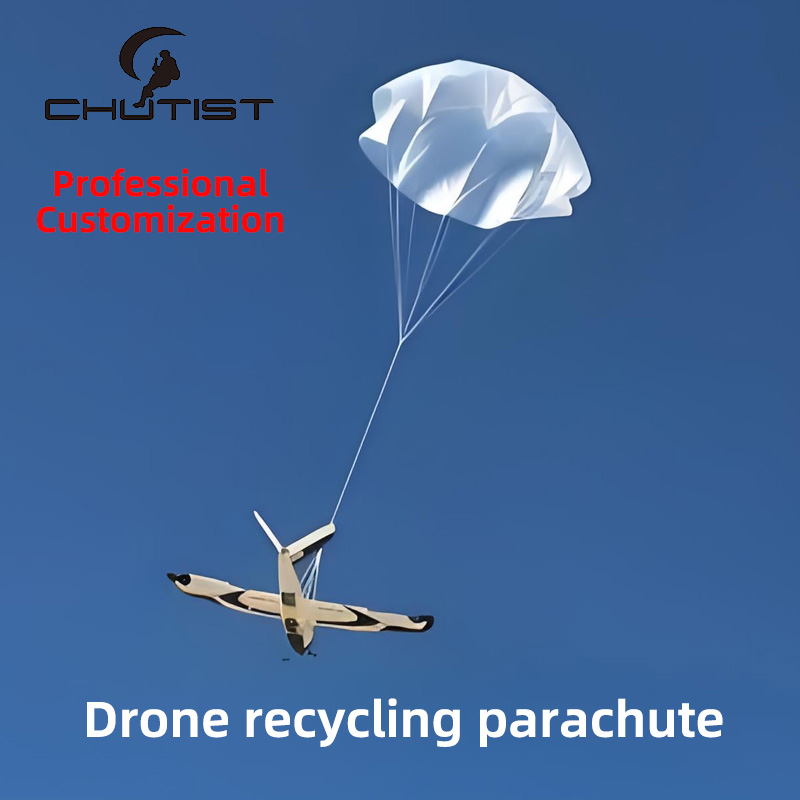
As unmanned aerial vehicles (UAVs) continue to expand into industrial, commercial, and research applications, flight safety has become a central design requirement rather than a secondary consideration. Modern UAV platforms operate with higher mass, greater autonomy, and increasingly complex missions, which significantly elevates operational risk.
Drone parachute systems play a critical role in reducing these risks. This technical guide explains how parachute recovery systems improve UAV flight safety, the types of hazards they mitigate, and why they are widely adopted in professional drone operations.
Understanding UAV Flight Safety
Flight safety in UAV operations refers to the ability to:
Prevent uncontrolled descent
Minimize harm to people and property
Protect onboard payloads
Reduce consequences of system failure
Unlike manned aircraft, UAVs cannot rely on pilot intervention during emergencies. Safety must therefore be embedded within system architecture through engineering controls.
What Is a Drone Parachute System?
A drone parachute system is an independent emergency recovery mechanism that deploys a canopy to slow descent and stabilize the aircraft when abnormal flight conditions occur.
Deployment can be triggered by:
Total power failure
Flight controller malfunction
Loss of propulsion
Extreme attitude deviation
Manual emergency command
Once deployed, recovery does not depend on propulsion, navigation, or active flight control.
Primary Safety Risks in UAV Operations
Before examining how parachutes improve safety, it is important to understand the risks they address.
Uncontrolled Free Fall
Loss of thrust or control causes UAVs to descend under gravity, often reaching dangerous velocities within seconds.
High Impact Energy
Impact energy increases rapidly with both mass and speed, especially for industrial drones.
Ground Injury Risk
UAVs operating over people, infrastructure, or vehicles pose serious safety hazards during failure events.
Payload Damage
Sensors, cameras, and research equipment are frequently more valuable than the aircraft itself.
Fire and Battery Hazards
High-energy impacts can trigger battery deformation and thermal events.
How Drone Parachutes Improve Flight Safety
1. Reducing Impact Energy
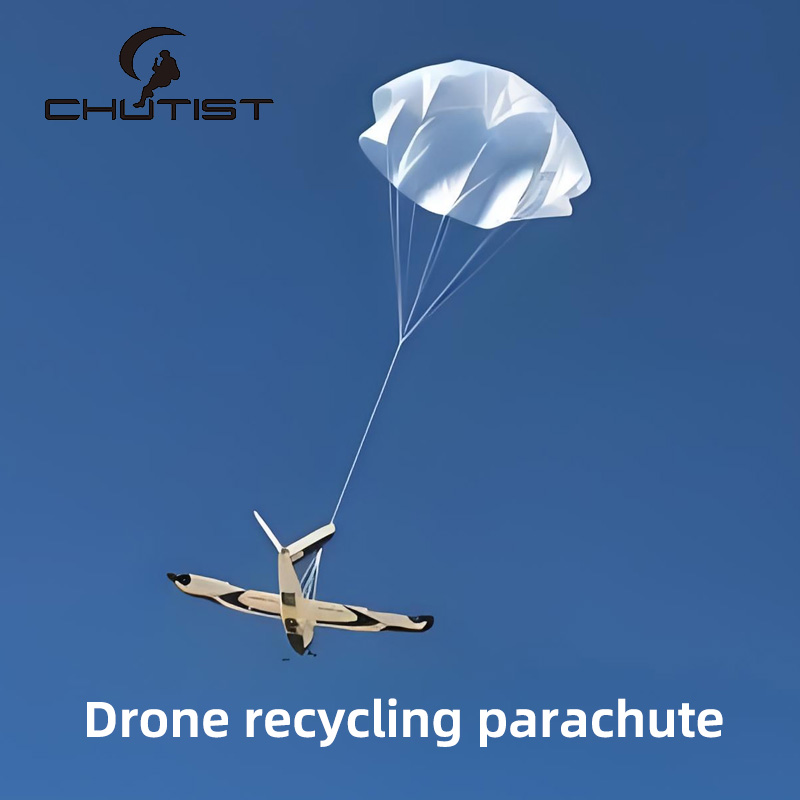
The primary safety benefit of a parachute is significant reduction of descent velocity.
By increasing aerodynamic drag, parachutes transform uncontrolled free fall into a controlled descent, reducing kinetic energy before ground contact.
Lower impact energy results in:
Reduced structural damage
Lower risk of battery rupture
Improved survivability of payloads
2. Stabilizing Descent Behavior
Parachutes provide passive aerodynamic stabilization.
Once fully inflated, the UAV:
Maintains a predictable vertical descent
Experiences reduced tumbling or rotation
Avoids chaotic fall trajectories
Predictable descent behavior improves safety modeling and risk assessment.
3. Operating Independently from Flight Systems
Parachute systems are designed to function independently from:
Flight controllers
Motors and ESCs
Primary power distribution
Navigation sensors
This independence ensures recovery capability even during total system failure.
4. Mitigating Ground Risk
By reducing descent speed and stabilizing motion, parachutes significantly lower the probability of severe ground injury or property damage.
This is especially important for operations conducted:
Near personnel
In industrial facilities
Along infrastructure corridors
In urban or semi-urban environments
5. Protecting High-Value Payloads
Many UAV missions involve payloads with high replacement cost or irreplaceable data.
Parachute recovery:
Reduces landing shock
Prevents catastrophic destruction
Improves chance of post-incident data recovery
6. Supporting Regulatory Safety Assessments
In many operational risk assessments, parachute systems are recognized as:
Ground risk mitigations
Emergency response layers
Safety barriers in system architecture
They often contribute positively to operational approval processes.
Safety Improvement Across Failure Scenarios
Drone parachutes provide protection during multiple failure modes:
Propulsion loss
Battery failure
Structural damage
Software malfunction
Sensor degradation
Severe weather encounters
Unlike some recovery methods, parachutes remain effective regardless of failure origin.
Importance of Proper System Design
The safety benefits of parachutes depend on correct system selection and integration.
Key factors include:
Appropriate load capacity
Verified deployment speed range
Sufficient deployment altitude
Correct mounting geometry
Independent activation logic
Improperly designed systems may not deliver intended safety improvements.
Testing and Reliability Validation
Effective safety improvement requires extensive testing, including:
Repeated deployment cycles
Drop testing under representative loads
Environmental durability testing
Aging and packing validation
Manufacturers with established aviation testing experience, such as Nanjing Hongguang General Aviation Equipment Technology Co., Ltd., support UAV safety through validated parachute recovery systems developed for repeated and reliable deployment across various operational conditions.
Limitations and Realistic Expectations
While parachutes significantly improve safety, they do not eliminate all risk.
Limitations include:
Minimum deployment altitude requirements
Reduced effectiveness at extremely low heights
Dependence on correct installation
Environmental influences such as strong wind
Understanding these limitations is essential for realistic safety planning.
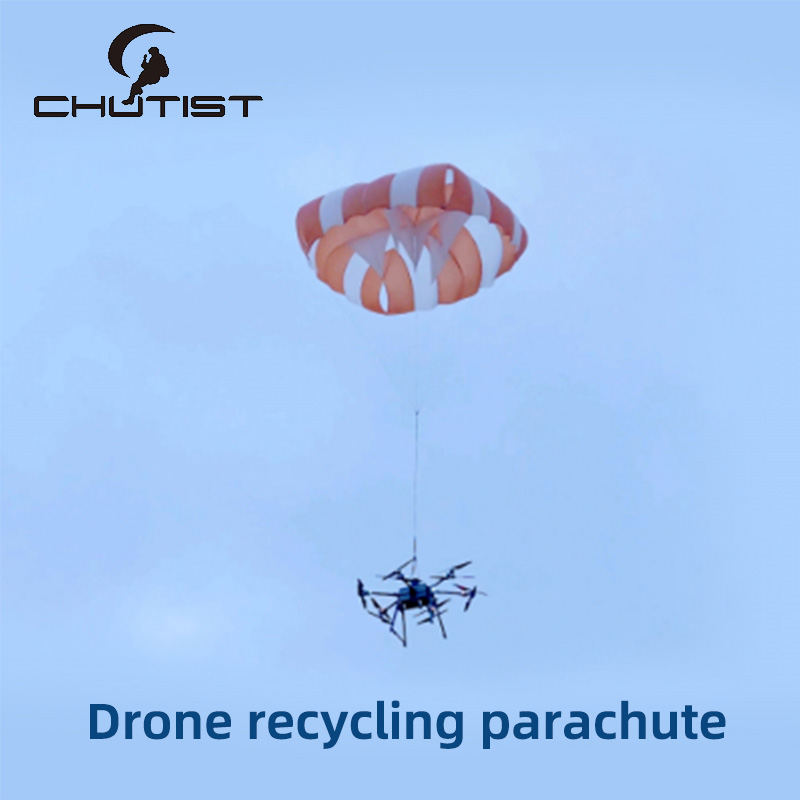
Drone parachute systems enhance flight safety by:
Reducing descent and impact energy
Stabilizing uncontrolled flight conditions
Operating independently from primary systems
Protecting people, infrastructure, and payloads
Supporting structured safety assessments
As UAV operations become more complex and widespread, parachute recovery systems are increasingly viewed as a fundamental safety mechanism rather than an optional accessory.
For professional UAV platforms, integrating a properly engineered drone parachute system represents one of the most effective ways to improve overall flight safety and reduce the consequences of unexpected failures.


