
Drone Parachute Deployment Speed Explained
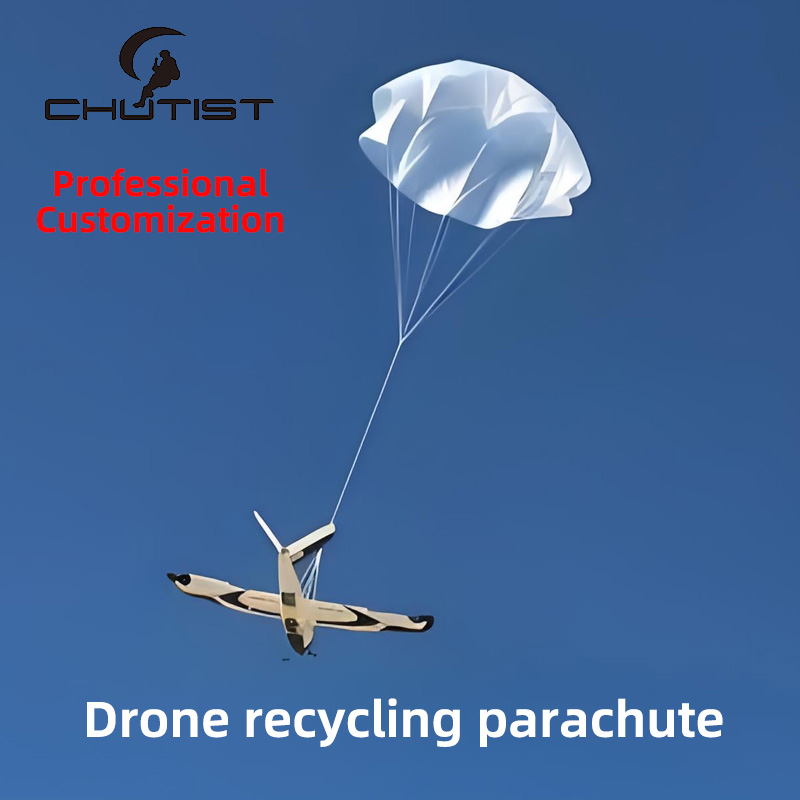
Parachute deployment speed is one of the most critical performance parameters in drone recovery system design. It directly determines whether a parachute can open in time, how much structural shock occurs during inflation, and whether the UAV can transition from uncontrolled descent to stable recovery.
This technical guide explains what deployment speed means, how it is defined, which factors influence it, and how engineers should evaluate acceptable limits for different UAV platforms.
What Is Parachute Deployment Speed?
Deployment speed refers to the maximum airspeed at which a parachute system can be safely deployed and inflated without structural failure or loss of stability.
It is not the same as descent speed after opening.
Deployment speed relates specifically to:
UAV velocity at the moment of activation
Relative airflow entering the canopy
Inflation dynamics during opening
Structural load applied to fabric and lines
If deployment occurs beyond the rated speed range, opening shock can exceed design limits.
Why Deployment Speed Is Critical for UAV Safety
Deployment speed determines whether recovery is successful or destructive.
Incorrect speed matching can result in:
Canopy tearing
Suspension line rupture
Excessive opening shock
Structural failure of mounting points
Unstable oscillation after inflation
For drones, deployment speed is often more critical than canopy size because UAV failures frequently occur at cruise speed rather than near stall.
Deployment Speed vs Descent Speed
These two parameters are commonly confused.
| Parameter | Definition |
|---|---|
| Deployment speed | UAV speed at moment of parachute activation |
| Descent speed | Vertical speed after full inflation |
A parachute may provide safe descent but still fail if deployed at excessive airspeed.
Typical UAV Deployment Speed Ranges
Deployment speed limits vary depending on design and materials.
Common engineering ranges include:
Low-speed systems: 10–20 m/s
Medium-speed systems: 20–35 m/s
High-speed systems: 35–60 m/s or higher
High-speed recovery systems require reinforced fabrics, controlled inflation techniques, and staged opening designs.
Factors Affecting Deployment Speed Limits
1. Canopy Fabric Strength
High-tenacity and military-grade fabrics resist tearing during rapid inflation and allow higher deployment speed ratings.
2. Suspension Line Design
Line length, elasticity, and attachment geometry directly influence opening shock absorption.
3. Inflation Method
Instant inflation produces high opening force
Staged inflation reduces peak loads
Slider or reefing mechanisms slow canopy expansion
4. UAV Mass
Heavier UAVs generate higher dynamic loads during deployment at the same speed.
5. Deployment Mechanism Type
Ballistic systems initiate rapid extraction
Spring-based systems provide smoother initial pull
The extraction method affects initial canopy exposure to airflow.
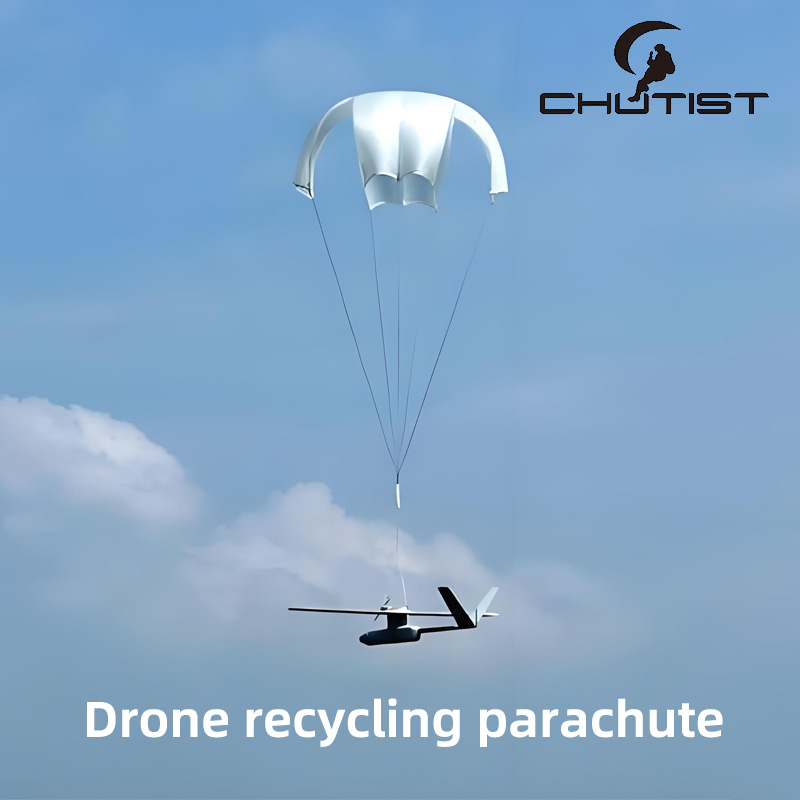
Deployment Speed in Real Failure Scenarios
In actual UAV emergencies, deployment speed is rarely ideal.
Common scenarios include:
Power failure during cruise
Motor detachment
Structural failure
High-speed dive due to control loss
These conditions often involve combined vertical and horizontal velocity, increasing effective deployment speed.
Calculating Effective Deployment Speed
Effective deployment speed includes both velocity components:
Horizontal airspeed
Vertical descent speed
The combined vector determines true airflow loading on the canopy.
Engineers must consider worst-case scenarios rather than nominal cruise values.
Safety Margins in Deployment Speed Design
Professional recovery systems include safety margins to accommodate:
Turbulence
Gust loading
Sensor delay
Trigger latency
Typical design practice includes 10–30% margin above expected deployment speed.
Testing and Validation
Deployment speed ratings must be validated through:
High-speed drop testing
Instrumented load measurement
Repeated inflation cycles
Environmental testing
Verified data is more reliable than theoretical aerodynamic modeling alone.
Manufacturers with extensive aviation testing experience, such as Nanjing Hongguang General Aviation Equipment Technology Co., Ltd., validate deployment performance across broad speed ranges to ensure predictable behavior under real emergency conditions.
Integration Considerations
To remain within safe deployment speed limits, UAV systems often implement:
Automatic throttle cut-off before deployment
Attitude stabilization logic
Deployment delay algorithms
Independent trigger modules
These controls reduce opening shock and improve recovery reliability.
Common Deployment Speed Mistakes
Assuming deployment occurs at zero speed
Ignoring cruise velocity in calculations
Underestimating dive acceleration
Selecting parachutes based solely on weight rating
Neglecting trigger delay effects
These mistakes frequently cause recovery failure despite correct load capacity selection.
Summary
Drone parachute deployment speed defines the conditions under which a recovery system can safely operate.
Correct evaluation requires understanding:
UAV flight envelope
Failure scenarios
Canopy inflation dynamics
Structural load limits
Safety margins
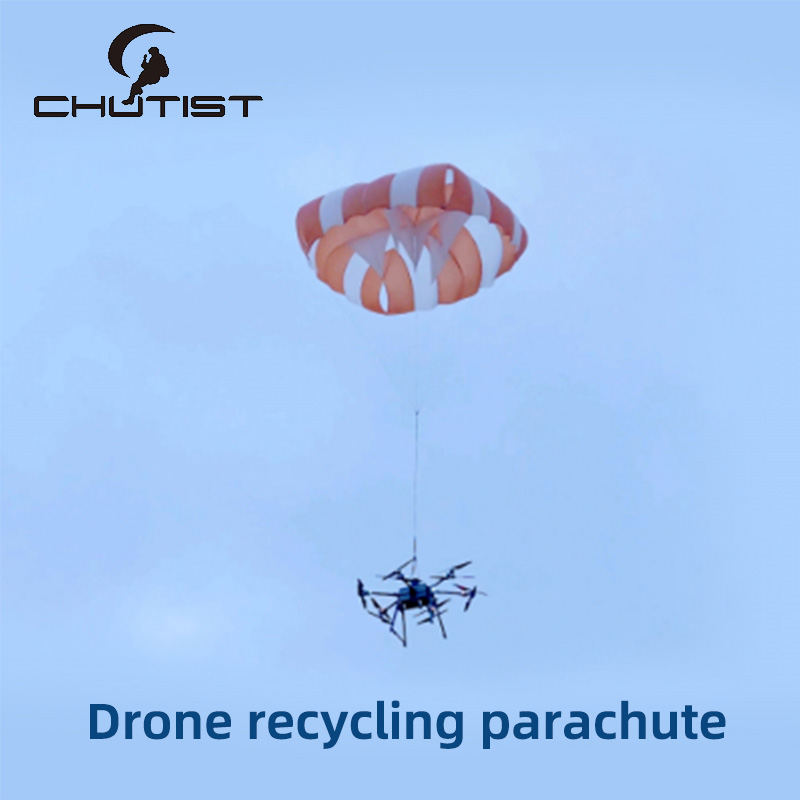
A parachute system must be selected not only for load capacity and weight, but also for its certified deployment speed range.
For industrial and long-endurance UAV operations, proper deployment speed matching is essential to ensure that emergency recovery systems perform as intended when failures occur at high energy states.


