
When Does a Drone Need a Parachute Recovery System: Technical Guide
When Does a Drone Need a Parachute Recovery System: Technical Guide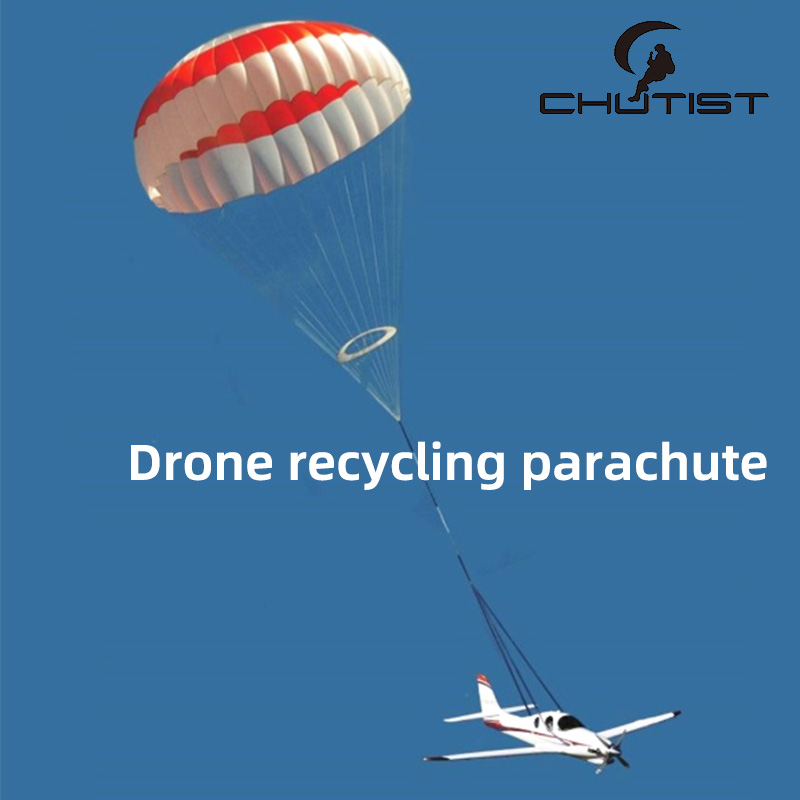
As unmanned aerial vehicles (UAVs) continue to expand into industrial, scientific, and public-sector operations, flight safety has become a primary design and regulatory concern. Unlike recreational drones, professional UAV platforms often operate with higher takeoff weights, complex payloads, and missions conducted above people, infrastructure, or restricted environments.
Under these conditions, a drone parachute recovery system is no longer an optional accessory but a critical safety subsystem. This technical guide explains when a drone requires a parachute recovery system, the engineering logic behind its necessity, and how risk scenarios are evaluated in real-world operations.
What Is a Drone Parachute Recovery System?
A drone parachute recovery system is an emergency descent device designed to reduce impact energy when a UAV experiences a catastrophic failure during flight.
The system typically consists of:
A parachute canopy
Deployment mechanism (spring-based or ballistic)
Activation sensors or flight controller interface
Tether and attachment structure
Optional flight termination module
When triggered, the parachute deploys rapidly to stabilize the drone and limit descent speed, allowing the aircraft to reach the ground with significantly reduced kinetic energy.
Why UAVs Face Unique Failure Risks
Unlike manned aircraft, drones rely heavily on electronic and software-based systems. Even with redundancy, certain failures occur without warning.
Common UAV failure categories include:
Power system failure
Motor or ESC malfunction
Flight controller crash
GNSS signal loss
Propeller detachment
Structural fatigue
Communication link interruption
In many of these scenarios, controlled landing is impossible. A parachute recovery system provides the final layer of protection once active flight control is lost.
When a Drone Requires a Parachute Recovery System
There is no single rule that applies to all UAVs. Instead, the requirement is determined by operational risk, aircraft characteristics, and regulatory frameworks.
The following conditions are the most widely accepted indicators that a drone should be equipped with a parachute recovery system.
1. UAV Takeoff Weight Exceeds Safety Thresholds
As drone mass increases, impact energy grows exponentially.
From a physics standpoint:
Kinetic energy = ½ × mass × velocity²
This means even a moderate increase in weight can result in significantly higher ground impact force.
In practical terms:
Drones above 2 kg already pose injury risk
UAVs above 5–7 kg can cause serious damage
Industrial drones above 10–25 kg are considered high-risk platforms
For medium and heavy UAVs, a parachute system is often the only effective method to reduce terminal velocity after loss of control.
2. Operations Over People or Public Areas
Many aviation authorities classify operations into categories based on ground risk.
Typical high-risk environments include:
Urban areas
Construction sites
Public events
Tourist zones
Transportation corridors
Industrial facilities
In these scenarios, the consequences of uncontrolled descent extend beyond equipment loss to human safety.
A parachute recovery system helps:
Reduce injury probability
Lower impact energy below regulatory thresholds
Enable operational approval in populated environments
For many authorities, parachutes are viewed as a core mitigation tool for “operations over people.”
3. Beyond Visual Line of Sight (BVLOS) Missions
BVLOS flights introduce extended response delays.
When a drone operates kilometers away from the pilot:
Manual emergency intervention becomes impossible
Link failure recovery options are limited
Terrain awareness may be incomplete
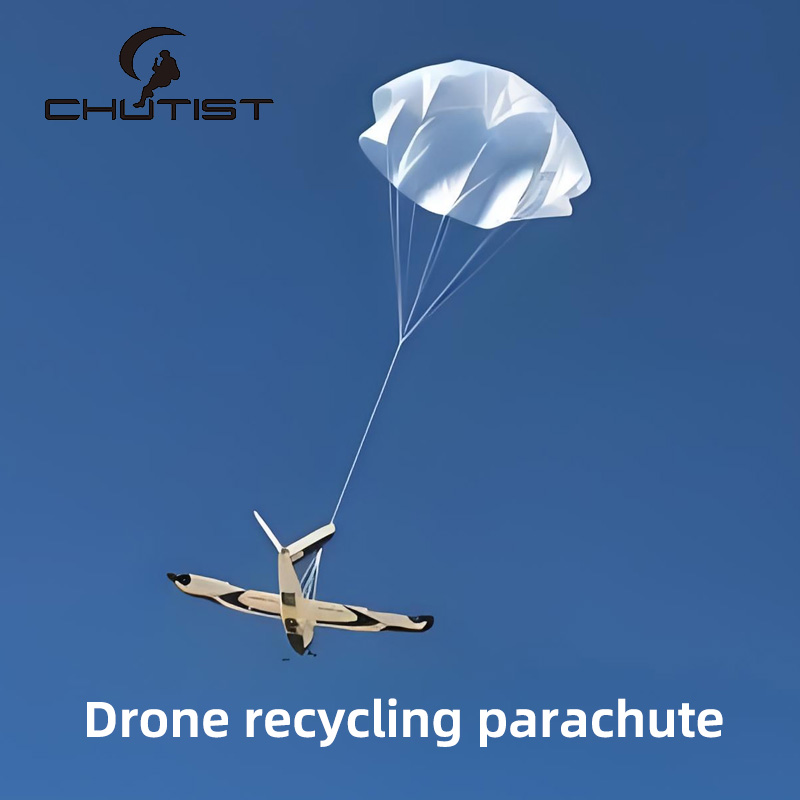
Under BVLOS conditions, parachute deployment becomes an autonomous safety response rather than a pilot-controlled action.
This is why many BVLOS risk assessments explicitly include parachute systems as part of the safety case.
4. Long-Endurance or High-Altitude Flights
High-altitude or long-duration UAV missions increase exposure time to failure.
Examples include:
Mapping and surveying
Powerline inspection
Pipeline monitoring
Environmental observation
Atmospheric research
The longer a drone stays airborne, the higher the probability of component fatigue, thermal stress, or electronic instability.
Parachute systems provide protection when failures occur far from safe landing zones.
5. Payloads With High Replacement or Safety Value
Some UAV payloads introduce additional risk beyond the aircraft itself.
These include:
LiDAR sensors
Multispectral cameras
Scientific instruments
Communication relay equipment
Medical or emergency payloads
A parachute system helps protect:
Sensitive instruments
Calibration integrity
Mission-critical equipment
Secondary ground hazards caused by falling payloads
In many research and testing programs, payload protection is one of the primary reasons for parachute installation.
6. Regulatory or Certification Requirements
In many regions, parachute systems are explicitly recognized in operational approval frameworks.
Typical regulatory references include:
SORA (Specific Operations Risk Assessment)
Operational Safety Case submissions
Special flight permits
Experimental flight approvals
Within these frameworks, parachute systems are often classified as:
Ground Risk Mitigation (GRM)
Emergency Descent Device (EDD)
Independent safety subsystem
Manufacturers such as Nanjing Hongguang General Aviation Equipment Technology Co., Ltd. have participated in the development and supply of aviation-grade parachute equipment used in certification-driven UAV programs, where system reliability and deployment consistency are critical.
7. Testing, Prototyping, and R&D Flights
Early-stage UAV testing presents elevated risk due to:
Incomplete flight tuning
Prototype structures
Experimental propulsion systems
Non-final firmware
During development phases, crashes are statistically more likely than in mature platforms.
Installing a parachute recovery system during testing can:
Prevent total airframe loss
Protect test data continuity
Reduce downtime between iterations
Improve overall R&D efficiency
For this reason, parachutes are commonly used during early flight validation.
When a Parachute May Not Be Necessary
While highly beneficial, parachute systems are not universally required.
They may be unnecessary when:
Drone weight is extremely low
Flights occur over open, unpopulated land
Maximum altitude is limited
Manual emergency landing is always possible
Mission risk classification is minimal
Even in these cases, operators often evaluate parachutes as an optional safety upgrade rather than a strict requirement.
Key Technical Indicators for Decision-Making
When determining whether a drone needs a parachute recovery system, engineers typically evaluate:
Maximum takeoff weight (MTOW)
Typical operating altitude
Flight environment density
Mission duration
Failure probability analysis
Acceptable impact energy thresholds
Regulatory compliance objectives
The decision is rarely emotional or marketing-driven—it is rooted in quantifiable risk modeling.
Summary
A drone requires a parachute recovery system when the consequences of uncontrolled descent exceed acceptable safety limits.
In most industrial and professional applications, parachutes are used when:
UAV weight creates hazardous impact energy
Flights occur near people or assets
Missions extend beyond visual range
Altitude and endurance increase failure exposure
Regulatory approval depends on risk mitigation
Payload value or safety importance is high
Rather than serving as a backup convenience, a parachute recovery system functions as the final safety barrier once all active control has been lost.
As UAV operations continue to integrate into shared airspace, parachute systems are increasingly viewed not as optional accessories, but as fundamental components of responsible drone design and deployment.


