
Best 30L Travel Backpack: Fit, Load and Limit Test
The best 30L travel backpack is not chosen because 30 liters matches a fixed number of travel days. It is chosen when the real packing list fits without distorting the bag, the closed external shape meets the transport role, priority items remain accessible and the fully loaded pack stays controlled.
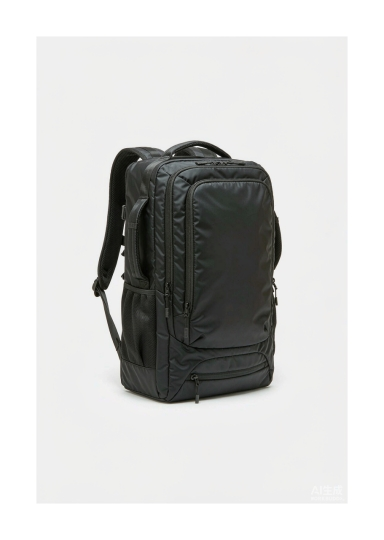
A 30-liter travel backpack sized as carry-on, with a sleek water-resistant shell, clamshell opening, padded shoulder straps, a side handle and a luggage pass-through panel, shown on a clean white background.
Treat 30L as a boundary to test. Climate, laundry, electronics, activity gear and baggage rules can make the same volume generous for one trip and insufficient for another. Build the load first, then determine whether 30L works or should be rejected.
Define the role of the best 30l travel backpack
Decide whether the pack will be a personal item, overhead cabin bag, checked bag or destination bag. The role determines external limits and handling. A 30L label does not guarantee any airline category, because usable shape and operator rules vary.
For mixed transport, record the strictest confirmed dimension and weight. The EU luggage guidance states that airlines set cabin-baggage size and item limits. Measure the packed bag rather than using capacity as a substitute for compliance.
Trial-pack the real list
Place the actual clothing, electronics, toiletries, documents and activity equipment together. Remove duplicates and separate items that will be worn, carried elsewhere or obtained at the destination. Pack the remaining load in the candidate and close it normally.
The bag should close without pressing rigid objects into electronics or forcing zippers around a bulge. Leave a controlled amount of variable space for the largest ordinary change, such as a layer or food. Do not reserve half the bag for undefined possibilities.
Measure usable space and packed shape
A 30L backpack with a tall narrow body behaves differently from one with a shallow rectangular body. Check whether the largest essential object passes the opening and sits in the intended orientation. Exterior pockets may add useful access while increasing the packed dimensions.
Measure height, width and depth after the load settles. If the bag meets its role only when important pockets are empty or compression damages contents, 30L has failed for that trip. The CHUTIST backpack range can provide format options, but the result must come from the chosen pack and load.
Design travel access
Create an access sequence for identification, phone, charger, medicines, water and a travel layer. High-frequency items should not expose the main clothing area. Dense equipment should stay close to the body, and liquids should have a retained separation plan.
Test access in a queue, vehicle seat and small accommodation space. A layout that looks organized when fully open may fail when the bag is upright or partly compressed. Choose fewer useful zones over many pockets with no assigned purpose.
Test the loaded carry
Wear the final bag with travel clothing. Walk, climb stairs, sit, turn in a narrow space and lift it to shelf height. Note repeated adjustment, backward pull, device pressure and handles that interfere with movement.
This test compares candidates for the user and load; it does not guarantee comfort or injury prevention. Use the backpack capacity guide for a broader capacity discussion, while this article keeps the decision centered on 30L.
Compare two 30L candidates with the same load
Use the same packing list, folding method and variable-space allowance in both candidates. Record closing effort, remaining usable space, packed dimensions, access time and loaded carry. This controls the comparison and prevents a different packing method from making one bag appear larger.
Repeat the test after removing one normal item and after adding the largest planned variable item. The better configuration should remain organized in both states. If one body shape only works at a single fill level, note that limitation before purchase.
Test climate and laundry assumptions
Repeat the packing list for the coldest or wettest part of the route. A 30L configuration that works with light clothing may fail when an insulating layer, rain shell or footwear change is added. Record whether those items are worn, packed or carried elsewhere.
Create a retained zone for used clothing and confirm that it does not contaminate documents or electronics. If laundry timing is essential to make 30L work, write the timing and backup plan into the trip assumptions. Capacity should not depend on an unrecorded service being available.
Plan for the return journey
Estimate what may change on the return: laundry separation, documents, consumables, weather layers or legitimate purchases. Reserve a defined amount of space or another baggage solution. Do not treat every possible purchase as a reason to carry a permanently oversized pack.
Repack the return configuration before departure when possible. Confirm that dense items, liquids and documents still have controlled zones and that the external measurements remain valid. A trip that starts inside 30L but predictably ends in overflow has not passed the full decision.
Use the same closed-bag measurement method for departure and return. If the planned return state cannot meet the assigned baggage role, choose a second controlled bag or another transport plan before the trip.
Know when 30L is the wrong size
Reject 30L when required equipment cannot fit without unsafe compression, when the packed dimensions exceed the transport role, when exterior overflow becomes routine, or when access collapses after one variable item is added. A larger pack or different baggage plan may be more honest.
Also reject 30L when it encourages checking a bag that was intended for the cabin or leaving necessary gear behind. The best 30L travel backpack passes because the complete trip stays within its boundary, not because the volume is fashionable.
Conclusion
The best 30L travel backpack is proven with the final list, closed measurements, real access and a loaded movement test. Use 30L when it contains the essentials with controlled variation, and reject it when the trip depends on overflow or assumptions. For a product discussion, share the packed list and transport role with CHUTIST.
Sources
Source: Your Europe: Luggage restrictions


